When Should You Refinance a Loan in 2026? (The 1% Break-Even Rule)
Wondering when to refinance your car loan or mortgage in 2026? Learn how the 1% break-even rule works, closing cost math, and credit score impacts.
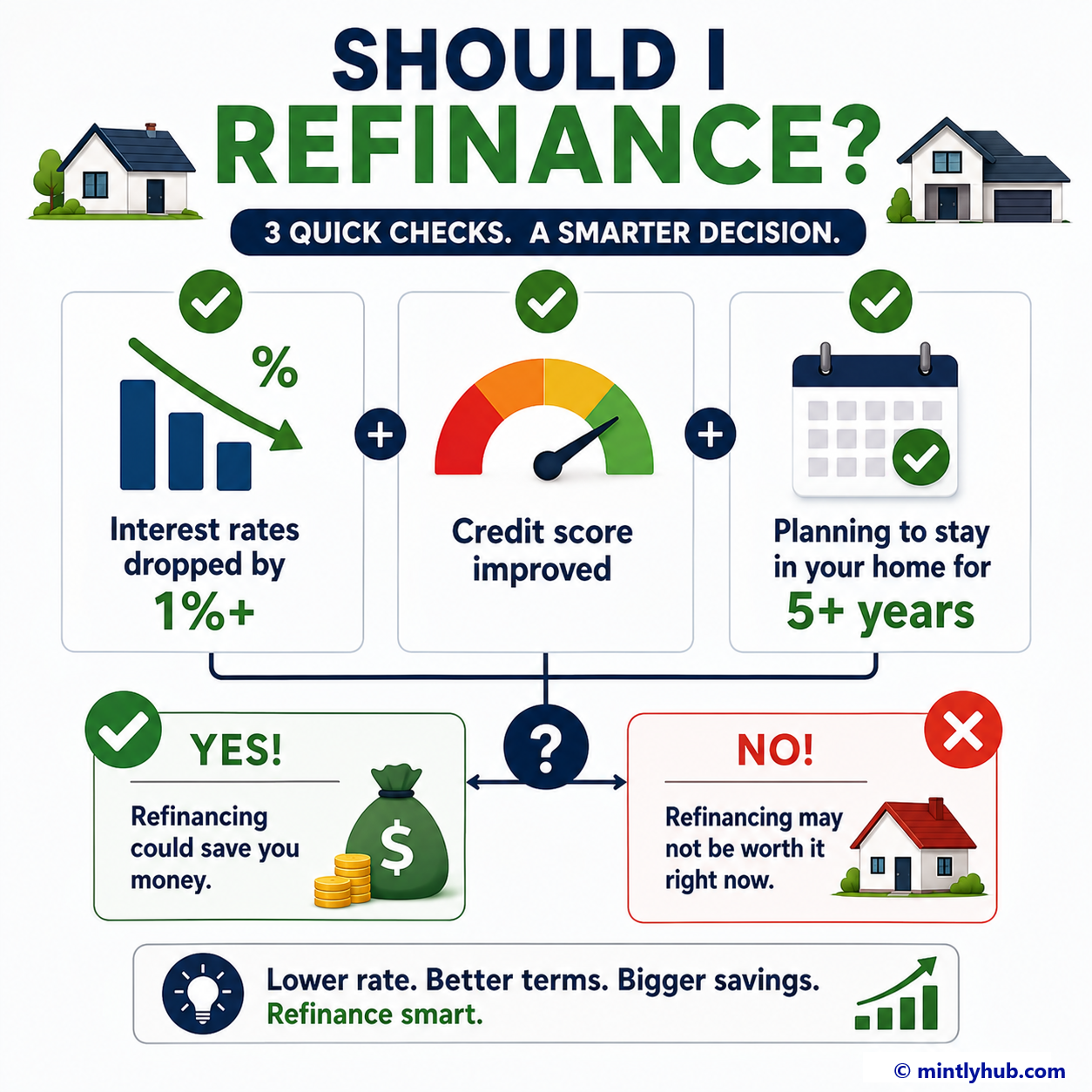
Knowing exactly when to refinance a loan in 2026 can save your household thousands of dollars in unearned bank interest, but executing a refinancing agreement at the wrong time can trap you in hidden origination fees. Whether you are holding an automobile note, a primary mortgage, or personal student debt, loan refinancing replacing an existing credit contract with a new lending instrument featuring an optimized Annual Percentage Rate (APR) or modified repayment amortization.
While advertisements from online banking institutions promise immediate monthly savings, disciplined borrowers must analyze underlying mathematical realities. Deciding to replace existing financing should depend entirely on calculating your precise break-even timeline and validating credit underwriting qualifications.
1. The Classic 1% Break-Even Rule Explained
For decades, financial planners advocated a straightforward rule-of-thumb: only pursue refinancing if you can secure an interest rate reduction of at least 1 percentage point (100 basis points) below your existing contract rate. According to lending education resources published by the Consumer Financial Protection Bureau (CFPB), lowering your interest rate by 1% or more typically generates sufficient monthly interest savings to offset administrative bank appraisal and origination charges within a standard 24-month horizon.
However, the 1% doctrine is not absolute. To evaluate whether refinancing benefits your unique financial profile, you must calculate your exact Break-Even Month using this division formula:
Total Upfront Closing Costs ($) ÷ Monthly Dollar Savings ($) = Number of Months to Break Even
If you plan to sell your automobile or relocate from your property before reaching this break-even month, refinancing will generate a net financial loss regardless of how low the advertised APR appears. Verify your personalized numbers right now with our interactive Loan Refinance Calculator.
2. Actionable Refinance Readiness Checklist
Before authorizing hard credit bureau inquiries that temporarily lower your credit score, systematically walk through our structured banking verification checklist:
📋 5-Step Refinancing Readiness Checklist
- ✔️Check for Prepayment Penalties: Verify your existing loan contract does not enforce punitive exit fees for liquidating balances prior to original schedule maturity.
- ✔️Confirm a FICO Score Improvement: Ensure your credit score has increased since your original loan origination date to unlock Tier 1 banking interest rates.
- ✔️Calculate All Upfront Closing Fees: Demand an explicit Good Faith Estimate listing title inspection charges, origination assessments, and underwriting fees.
- ✔️Verify Stable Employment & DTI: Ensure your debt-to-income ratio stays beneath 43% and your documented household wages remain secure.
- ✔️Avoid Resetting Your Amortization Clock: When refinancing, match your new loan duration to your remaining months rather than extending back out to a fresh 30-year or 72-month timeline.
3. Real-Life Refinancing Scenario: Auto Loan Optimization
To grasp how minor APR differentials translate into substantial dollar savings over time, examine this practical consumer refinancing scenario modeled on current institutional auto loan metrics from our Auto Loan Calculator:
💡 Case Study: Mark’s $35,000 Truck Loan Overhaul
Two years ago, Mark financed an automobile for $35,000 at an 8.5% APR over 60 months when his credit score was average. His original monthly payment stood at $718.08. Today, Mark has improved his credit score to 760 and currently owes exactly $22,500 with 36 months remaining.
4. Refinancing vs. Mortgage Recasting: Know Your Alternatives
If your goal is simply lowering your monthly real estate mortgage remittance without enduring intrusive credit checks or high legal closing expenses, refinancing might not represent your optimal choice. According to legal consumer lending publications from the Federal Trade Commission (FTC), homeowners sitting on substantial cash savings should consider loan recasting.
In a mortgage recast, you contribute a lump-sum principal prepayment directly toward your lender, requesting they recalculate lower monthly amortization disbursements across your original interest rate and remaining expiration horizon. To evaluate exact financial tradeoffs between both structural options, read our detailed guide on Loan Refinance vs. Mortgage Recasting in 2026.
❓ Frequently Asked Questions About Refinancing in 2026
Does refinancing a loan negatively affect my FICO credit score?
Yes, applying for a loan refinance triggers an official hard credit inquiry, which typically dips your credit score by 3 to 8 points temporarily. Additionally, closing your old loan account slightly shortens your average credit history length, but consistent on-time payments on your new refinanced account restore your credit standing within three to six months.
How soon can I refinance a loan after original origination?
Most auto loan and personal bank lenders permit refinancing immediately after your first mortgage or car installment is processed (typically within 30 to 60 days). However, standard conventional and FHA home mortgages frequently enforce a strict six-month (180-day) "seasoning window" before allowing homeowners to refinance into a new contract.
What is a simple formula to check if refinancing is worth it?
Use the simple Break-Even Division formula: divide your anticipated upfront closing fees by your expected monthly dollar savings. If you intend to reside in your home or retain your vehicle for longer than the calculated break-even month count, refinancing is mathematically beneficial and builds household equity.