Debt Consolidation: Does It Actually Work? (Pros, Cons & When to Do It)
Is consolidating debts into one loan actually smart? Discover the real math, hidden risks, pros and cons, and when debt consolidation saves money.
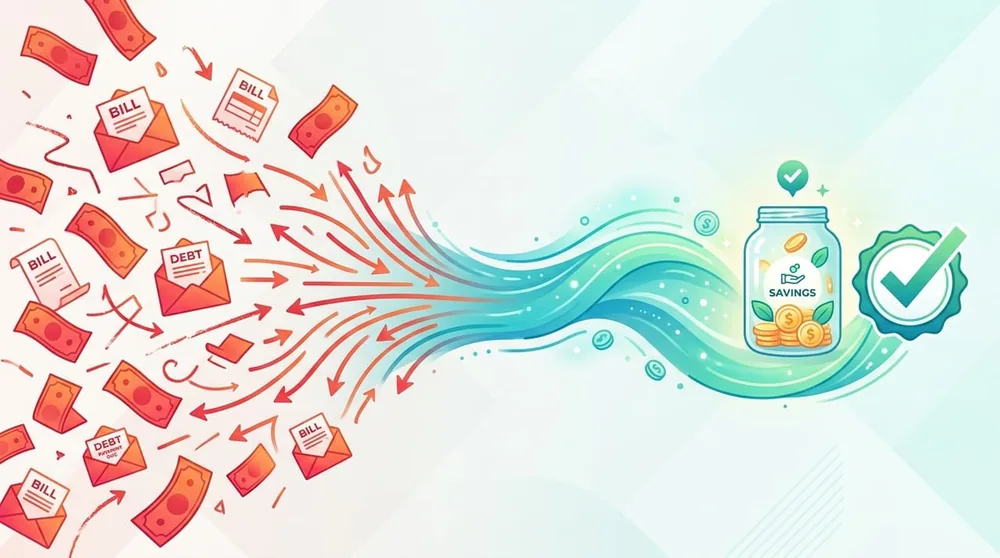
MintlyHub — Analyzing the Mechanics and Realities of Modern Debt Consolidation
If your monthly financial routine involves juggling four different credit card due dates, tracking escalating variable interest rates, and feeling like your minimum payments vanish into thin air without making a dent in your balances, you have inevitably encountered advertisements for debt consolidation.
On paper, debt consolidation sounds like a financial miracle: take a dozens of scattered, high-interest obligations and simplify them into a single, predictable monthly payment with a vastly reduced interest rate. But does debt consolidation actually solve the underlying problem, or is it merely an elaborate financial Band-Aid that risks making your overall debt burden worse? Let's dismantle the mechanics, weigh the candid pros and cons, and analyze precisely when executing a consolidation strategy makes foolproof mathematical sense.
1. The Exact Mechanics: What Debt Consolidation Really Does
First, we must dispel a persistent financial myth: debt consolidation does not magically extinguish or forgive your existing principal balances. It simply reorganizes them. In a standard debt consolidation scenario, you secure a new, centralized credit instrument—most commonly a personal installment loan or a zero-interest balance transfer card—and immediately utilize those proceeds to pay off multiple existing high-interest creditors in full.
Once executed, your relationship with those prior high-interest revolving credit card issuers shifts to zero outstanding liability. Instead of navigating multiple login portals, divergent due dates, and punitive variable interest rates averaging over 22% in the modern retail banking market, you become responsible for exactly one consolidated monthly payment owed to a single financial institution.
The core objective is achieving a lower weighted average interest rate across your debt portfolio, which radically reduces the volume of monthly capital wasted on financing charges and accelerates the retirement of your actual borrowed principal. For more insights on evaluating offers and avoiding deceptive debt relief programs, consult the FTC on debt consolidation.
2. The 5 Genuine Pros of Consolidating Your Debt
When applied to the correct financial profile, debt consolidation offers substantial psychological and monetary advantages that can dramatically shorten your timeline to financial independence.
- Immediate Reduction in Monthly Interest Expenses: This is the paramount mathematical advantage. Swapping a $10,000 credit card balance carrying a 24% APR for a structured 3-year consolidation loan at a 10% APR instantly cuts your annualized interest overhead by more than half. Over the 36-month term, this simple structural shift retains nearly $2,400 inside your checking account rather than forfeiting it to bank profits.
- Fixed Repayment Term and Predictable Payoff Date: Minimum payment formulas on revolving credit cards are intentionally designed by lenders to stretch repayment across decades. A personal consolidation loan introduces fixed amortization schedules (such as 24, 36, or 60 months). You know the exact day, month, and year you will be officially debt-free.
- Radical Administrative Simplification: Managing five different minimum payments due on the 4th, 12th, 18th, 23rd, and 28th of every month creates emotional cognitive fatigue and elevates the risk of accidental late payment penalties. Reducing your cognitive overhead to exactly one simple transfer immediately following your primary payday restores clarity and financial control.
- Potential Boost to Your Credit Score: Utilizing a fixed installment personal loan to zero out revolving credit card balances creates an immediate, positive structural shift in your credit score report. Your revolving credit utilization ratio drops toward 0%, instantly resolving one of the most punitive negative weighing factors inside standard FICO grading algorithms.
- Lower Total Monthly Outflow: In severe budgeting emergencies, stretching your consolidated balance across a slightly extended term can significantly compress your required monthly payment amount. While this increases total interest accrued over time, it immediately rescues struggling households from active default, bank overdraft fees, or bankruptcy.
3. The Critical Cons and Hidden Risks Most Borrowers Miss
Despite the gleaming marketing copy promulgated by online lending institutions, consolidation involves genuine pitfalls. Understanding where previous borrowers have failed protects you from repeating the same disastrous financial patterns.
- The Fatal "Empty Card" Spending Relapse: This single behavioral trap destroys more debt consolidation plans than any other variable. Once borrowers utilize loan proceeds to zero out their revolving credit card lines, they suddenly see thousands of dollars in newly available borrowing limits. If the underlying consumption habits that caused the initial debt accumulation remain unaddressed, borrowers inevitably begin charging new discretionary expenses onto those cleared cards while simultaneously repaying the large new consolidation loan—effectively doubling their total financial liability within twelve months.
- Origination Fees Can Erase Projected Savings: Many online lending platforms advertise competitive nominal interest rates while quietly inserting mandatory upfront origination fees ranging from 1% to as high as 8% of the funded balance. On a $20,000 consolidation loan, an 8% origination fee instantly siphons away $1,600 in net borrowing capital at inception, destroying a substantial portion of your projected interest savings. Always evaluate loans strictly by comparing their final inclusive APR metrics.
- Stretching Loans Longer Costs More Total Dollars: Replacing a 24-month high-interest credit card payoff journey with a low-interest 7-year consolidation loan might lower your individual monthly payment by $150, but the compounding timeline arithmetic can cause your cumulative total lifetime interest expenditure to climb significantly.
- Requires Good Credit for Optimal Mathematical Gains: To unlock truly compelling single-digit interest rate reductions from tier-one lenders, you generally must possess a healthy credit score (typically above 680). If your score has already degraded below 600 due to maxed-out utilization or historical delinquencies, offered consolidation rates may not be measurably lower than your existing credit card APRs.
4. The 3 Best Ways to Consolidate High-Interest Balances
If you have evaluated the risks, stabilized your spending discipline, and determined that consolidation is right for you, selecting the appropriate funding mechanism is critical.
A. 0% APR Balance Transfer Credit Cards
For debt loads under $10,000 that you are supremely confident you can fully extinguish within 12 to 21 months, an introductory 0% APR balance transfer credit card is unquestionably the cheapest financing option in personal finance. You transfer existing high-interest revolving balances directly onto the new card, paying a simple one-time transfer fee (typically 3% to 5%). From that moment forward, 100% of your monthly remittance pays down pure principal without a single penny lost to ongoing interest charges during the promotional window.
B. Fixed-Rate Personal Installment Loans
For larger balances ($10,000 to $50,000+) or borrowers requiring a steady 3- to 5-year repayment highway without looming promotional expiration deadlines, unsecured personal installment loans are the gold standard. Offered widely by regional community credit unions, traditional banks, and online fintech platforms, these loans disperse a finite lump sum with fixed interest rates and invariant monthly payments that never surprise you regardless of wider economic inflation or Federal Reserve policy shifts.
C. Home Equity Options (HELOCs or Cash-Out Refinancing)
Homeowners possessing substantial accumulated real estate equity frequently consider utilizing a Home Equity Line of Credit (HELOC) or executing a cash-out mortgage refinance to absorb retail debts, as real estate collateral traditionally secures much lower interest rates than unsecured consumer loans. However, this strategy requires extreme caution: you are transforming unsecured retail debt—which carries zero physical property repossession risk—into secured debt directly encumbering your primary residential sanctuary. Failing to repay an unsecured credit card ruins your credit score; failing to pay a home equity loan risks foreclosure and the loss of your family's home. You can analyze real estate restructuring mechanics using our Loan Refinance Calculator.
5. When You Should Reject Consolidation Entirely
There are documented scenarios where signing up for debt consolidation is mathematically or behaviorally counterproductive. Stand firm and bypass consolidation completely if your financial landscape mirrors any of these realities:
- Your Total Debt Balance Can Be Cleared in Under 8 Months: If executing a focused austerity budget allows you to liquidate your total credit balances within a brief half-year sprint, the minor interest saved by consolidating is completely negated by application hassles, soft and hard bureau inquiry drops, and lender origination charges. Simply deploy an aggressive credit card payoff strategy and tackle the existing accounts directly.
- Your Spending Issues Remain Actively Unresolved: If you cannot honestly explain why you accumulated high-interest debt in the first place, or if you still rely on credit cards to bridge routine monthly income-to-expense deficits, taking out a consolidation loan is guaranteed financial disaster. You must build and live within a positive cash flow routine using our 50/30/20 Budget Calculator for at least ninety consecutive days before considering any form of loan restructuring.
- The Offered Rates Offer No Tangible Improvement: If your current weighted average credit card APR is 22%, and subprime consolidation algorithms offer you an installment loan at 21% with a 5% upfront fee, the mathematical efficiency is strictly negative. Walk away and focus entirely on revenue expansion and expense elimination.
6. Actionable Checklist: How to Start Correctly
If your financial profile indicates that debt consolidation represents an empowering, sensible pathway toward financial freedom, execute this systematic checklist to ensure absolute structural safety:
- Freeze Your Current Credit Cards Immediately: Upon disbursing funds to clear existing credit accounts, immediately remove those credit card numbers from Amazon, Apple Pay, PayPal, and automatic autofill browsers. Put the physical plastic cards inside a secure safe or shred them entirely. Keep the historical accounts officially open to preserve your credit duration history, but render them completely physically inaccessible for spontaneous consumption.
- Establish a Non-Negotiable Starter Emergency Reserve: Dedicate your initial monthly cash flow relief toward stocking an insulated $500 to $1,000 cash emergency buffer inside a dedicated high-yield savings account. This liquid reserve acts as your primary insurance policy against unexpected life emergencies, ensuring you never need to swipe a newly zeroed credit card when a vehicle requires urgent mechanical repairs.
- Automate Your Consolidated Monthly Installments: Schedule automatic debit withdrawals directly from your primary payroll checking account on the morning following payday. Many top-tier lending institutions provide an immediate 0.25% to 0.50% interest rate discount purely for enrolling in auto-pay, while simultaneously ensuring you never trigger a late mark across Experian or Equifax databases.
- Direct Any Surplus Windfalls Straight to Loan Principal: Whenever you receive an annual tax refund, workplace performance bonus, or secondary income windfall, immediately funnel 100% of those unexpected proceeds directly toward prepaying your consolidated loan principal. Accelerating your payoff table strips years of unearned compounding interest off your repayment schedule and brings forward the ultimate day of complete financial freedom!