Best Secured Credit Cards in 2026 to Rebuild Your Credit
is an effective financial tool for establishing or repairing a damaged credit profile. By providing a refundable cash deposit, borrowers lower the lender's risk while gaining the ability to demonstrate responsible borrowing behavior directly to the major credit bureaus.
Understanding the Mechanics of Secured Credit Cards
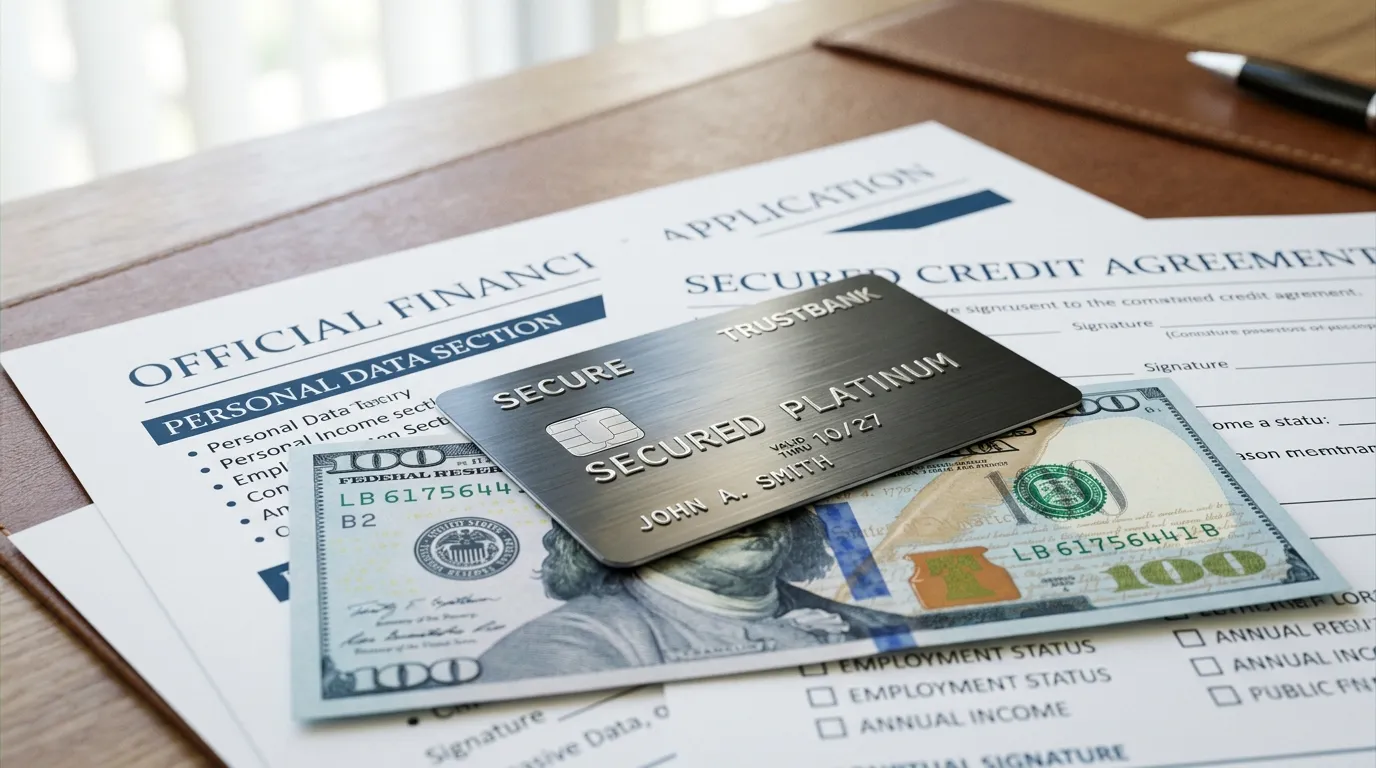
requires a cash deposit that serves as collateral for the credit limit. For example, if an applicant deposits $500, the credit limit on the card will typically be exactly $500. This structure protects the issuing bank; if the borrower defaults on the payments, the bank retains the deposit to cover the balance.
Aside from the initial deposit, secured cards function exactly like traditional unsecured cards. Purchases are made, monthly statements are generated, and the balance accrues interest if not paid in full. The critical factor is that the payment history is reported to Equifax, Experian, and TransUnion. Consistent, on-time payments contribute positive data to the credit profile, which is the primary mechanism for increasing a FICO score.
The security deposit is strictly held in reserve. It is not used to pay the monthly bill. Borrowers must make standard monthly payments out of their checking accounts. The deposit remains untouched unless the account falls into severe delinquency or until the account is closed or upgraded.
The Mathematical Impact on FICO Scores
Credit scores are calculated using specific weighted categories. Payment history accounts for 35% of a FICO score, making it the most heavily weighted factor. Credit utilization—the amount of available credit currently being used—accounts for another 30%.
For an individual starting with a FICO score of 550, securing a card with a $300 limit and making $50 in purchases per month results in a 16.6% utilization rate. Maintaining this low utilization and making 12 consecutive on-time payments generates 12 positive data points across all three bureaus. This consistent behavior directly targets the two categories that comprise 65% of the total credit score calculation.
Key Metrics for Evaluating Secured Cards
The market contains numerous secured card options, but not all are consumer-friendly. Predatory lenders frequently target individuals with subprime credit by attaching hidden fees to their products. When selecting a secured card, evaluate the following criteria:
- Zero Annual Fees: Borrowers should not pay annual fees or monthly maintenance fees for the privilege of holding their own deposit as collateral.
- Clear Graduation Paths: The issuer must maintain a documented process for reviewing accounts and upgrading them to unsecured status, which returns the deposit to the cardholder.
- Comprehensive Bureau Reporting: The issuer must report to Equifax, Experian, and TransUnion. Reporting to only one or two bureaus limits the card's effectiveness in rebuilding overall credit.
- Grace Periods: The card should offer a standard grace period of at least 21 days where no interest is charged on new purchases if the previous statement balance was paid in full.
Top Pick: Discover it® Secured Credit Card
The Discover it® Secured Credit Card consistently provides one of the most advantageous structures for rebuilding credit. It requires a minimum deposit of $200 and charges no annual fee.
A significant advantage of this card is its rewards program. Cardholders earn 2% cash back at gas stations and restaurants on up to $1,000 in combined purchases each quarter, plus 1% cash back on all other purchases. Earning rewards on a secured card is rare in the current financial market.
Furthermore, Discover implements an automated account review process beginning at seven months. During this review, Discover evaluates the account's payment history and the cardholder's overall credit profile to determine if the account qualifies for an upgrade to an unsecured line of credit. If approved, the security deposit is refunded, and the credit history remains intact on the credit report.
Runner-Up: Capital One Platinum Secured Credit Card
The Capital One Platinum Secured Credit Card is a strong alternative, particularly for individuals who may struggle to produce a $200 upfront deposit. Capital One utilizes a tiered deposit structure based on the applicant's credit profile.
Depending on the initial credit assessment, an applicant may secure a $200 credit limit with a deposit of $49, $99, or $200. This fractional deposit requirement lowers the barrier to entry for establishing credit.
Capital One also automatically reviews accounts for credit line increases in as little as six months. While this increase may not immediately graduate the card to unsecured status, it provides additional available credit, which can mathematically lower the cardholder's credit utilization ratio and positively impact their credit score.
Alternative Structures: Chime Credit Builder Visa®
The Chime Credit Builder Visa® operates on a different fundamental structure than standard secured cards. It functions similarly to a prepaid card but is reported to the credit bureaus as a credit account.
This card requires an active Chime checking account. Cardholders transfer funds from their checking account to their Credit Builder account, and that transferred amount becomes the credit limit for the month. Because there is no fixed minimum deposit, users control their limit based on their available cash flow.
Notably, the Chime Credit Builder card does not report a credit utilization ratio to the bureaus. This means cardholders cannot be penalized for utilizing a high percentage of their available funds, eliminating one of the common pitfalls of rebuilding credit with low-limit cards. Additionally, there is no hard credit check required for approval.
Strategic Timeline for Upgrading to Unsecured Credit
Effectively utilizing a secured card requires a disciplined approach over a 12-month timeline.
During months 1 through 6, focus entirely on establishing a flawless payment history. Set up automatic payments to ensure the statement balance is paid in full every month. Keep utilization below 10% by making only minor, necessary purchases, such as a single monthly subscription.
Around month 7, issuers with graduation programs will begin reviewing the account. Ensure that no new negative marks (such as late payments on other accounts or new hard inquiries) have appeared on the credit report during this period. If the issuer upgrades the account, the deposit will be returned. If not, continue the pattern of low utilization and on-time payments, as issuers typically continue to review the account on a monthly or quarterly basis.
Frequently Asked Questions (FAQs)
Do secured cards build credit as fast as unsecured cards?
Yes. The major credit bureaus calculate payment history and utilization identically for both secured and unsecured cards. A positive payment history on a secured card provides the exact same mathematical benefit to a FICO score as it would on an unsecured card.
Can an application for a secured credit card be denied?
Yes. While approval odds are significantly higher than for unsecured cards, applicants can still be denied. Common reasons for denial include an active, undischarged bankruptcy, an inability to verify identity or income, or a history of defaulting with that specific issuing bank.
What happens to the security deposit if the account is closed?
If the account is closed with a zero balance, the issuer will refund the full deposit amount, typically via a mailed check or direct deposit, within a few billing cycles. If the account is closed with an outstanding balance, the issuer will use the deposit funds to pay off the balance and return any remaining amount to the account holder.