How to Qualify for Student Loan Forgiveness in 2026
Having your federal student loans completely wiped out is possible, but it requires strict adherence to specific government rules. Whether you work in public service or are on a long-term income-driven repayment plan, here is the exact roadmap to loan forgiveness this year.
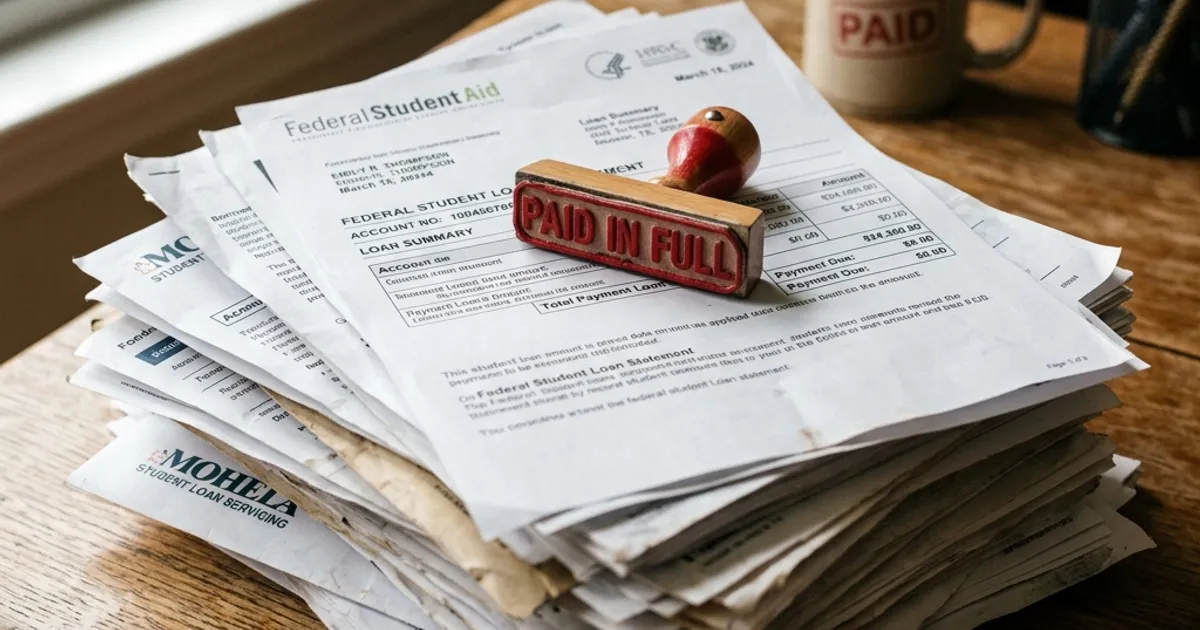
Public Service Loan Forgiveness (PSLF): The Gold Standard
The Public Service Loan Forgiveness (PSLF) program remains the most robust and financially beneficial avenue for clearing student debt. Enacted to incentivize skilled professionals to enter public service, PSLF forgives the entire remaining balance of Direct Federal Loans after exactly 120 qualifying monthly payments.
To qualify for PSLF, the focus is entirely on your employer, not your specific job title. You must work full-time for a U.S. federal, state, local, or tribal government agency, or a 501(c)(3) non-profit organization. For example, an accountant working directly for a public university qualifies just as much as a professor at the same institution. Private sector workers are strictly excluded, regardless of their role.
Consider a numerical example: If you owe $100,000 in student loans and earn a $60,000 public sector salary, an income-driven repayment plan might set your monthly payment to $250. Over 120 payments (10 years), you will pay $30,000 out of pocket. At month 121, the remaining $70,000 (plus accrued interest) is legally erased by the Department of Education.
Income-Driven Repayment (IDR) Cancellation
If you do not work in the public sector, the primary path to federal forgiveness relies entirely on the passage of time. Income-Driven Repayment (IDR) plans index your monthly payment directly to your discretionary income. If your debt-to-income ratio is high, these plans are critical for preventing default.
The most recent adaptation of IDR is the SAVE (Saving on a Valuable Education) Plan, which significantly lowers the monthly threshold for many borrowers. Crucially, all IDR plans include a built-in forgiveness clause. If you maintain compliant payments for 20 years (for undergraduate loans) or 25 years (for graduate loans), the federal government wipes out the remaining balance.
This is an automatic provision. The challenge is ensuring that every payment you make officially qualifies. Payments made while under default status, or payments made under incorrect standard repayment plans, often do not count toward your 20-year or 25-year timeline.
The Tax Implications: Understanding the "Tax Bomb"
There is a massive financial distinction between PSLF and IDR forgiveness. While PSLF is fundamentally tax-free at the federal level, debt cancelled through a 20-year or 25-year IDR program has historically been treated as taxable income by the IRS.
This phenomenon is known as the "student loan tax bomb." If you reach your 25th year of repayment and the government forgives a remaining balance of $150,000, that $150,000 could be added to your earned income for that tax year. This could severely alter your tax bracket and result in a federal tax liability of $30,000 or more, payable to the IRS by the following April.
It is imperative to plan for this eventuality. Borrowers relying on IDR forgiveness often need to establish a dedicated, long-term savings account specifically designated to pay this future tax obligation. Congress occasionally passes temporary provisions to make IDR forgiveness tax-free, but these are typically temporary and should not be relied upon for multi-decade financial planning.
Teacher Loan Forgiveness
For educators, there is a separate, highly specific program known as Teacher Loan Forgiveness. This program is much faster than PSLF, requiring only 5 complete and consecutive years of teaching, but the financial benefit is strictly capped.
Under this program, highly qualified special education, math, and science teachers working in low-income schools can receive up to $17,500 in forgiveness. Teachers of other subjects may qualify for up to $5,000.
Borrowers must weigh this option carefully against PSLF. You cannot double-count your years of service. A teacher who utilizes Teacher Loan Forgiveness after 5 years resets their PSLF clock to zero. Therefore, if a teacher owes a massive balance, ignoring the 5-year Teacher Loan Forgiveness and simply working 10 years for full PSLF is mathematically superior.
Avoiding Scams and Predatory Consolidation
Because the student loan system is complex, the market is flooded with deceptive companies charging exorbitant fees for services you can do yourself for free. These organizations will falsely promise immediate loan forgiveness or aggressive balance reductions for a "processing fee."
Consolidating federal loans into a private bank completely strips away your eligibility for both PSLF and IDR forgiveness forever. There is no legal mechanism to reverse this. Once your federal loans become private loans, you are at the mercy of the private lender. If you are struggling with a private lender, consult resources to lower your debt-to-income ratio immediately.
Action Plan: Securing Your Eligibility in 2026
If you intend to pursue PSLF, inaction will cost you. You must actively certify your employment to ensure your payment counts are accurately recorded by the government.
The most critical step is submitting a PSLF Employment Certification Form (ECF) every single year. Do not wait until year 10 to submit 10 years' worth of paperwork. By submitting the ECF annually, your loan servicer is forced to update your official payment tally. If they make an accounting error in year 3, you can resolve it immediately, rather than discovering a discrepancy a decade later.
For those not pursuing public service, ensuring you are on the optimal IDR plan is vital. If you expect your income to rise substantially over the next decade, aggressive repayment might mathematically beat out IDR forgiveness. Before you make decisions, understand how to pay for college without loans for any future educational expenses to avoid expanding your current debt load. For complete program details and eligibility criteria, consult the official Federal Student Aid forgiveness page.
Frequently Asked Questions (FAQs)
Can private student loans be forgiven by the government?
No. Federal forgiveness programs strictly apply to federal direct loans. Private loans issued by banks or private financial institutions are not eligible for federal forgiveness, PSLF, or federal Income-Driven Repayment plans.
Do I need to make 120 consecutive payments for PSLF?
The 120 qualifying payments do not need to be consecutive. You can work in the public sector, leave for private employment, and return to public service later. Your prior qualifying payments remain valid.
What happens if my income increases drastically while on IDR?
IDR plans are calculated based on your annual tax returns. If your income increases, your required monthly payment will increase proportionally. If your payment becomes high enough to pay off the loan before year 20 or 25, you simply pay the debt in full and receive zero forgiveness.
Does forbearance count toward my 120 PSLF payments?
Under standard rules, months spent in forbearance or deferment do not count toward your 120 payments. However, exceptions have been made during specific government-mandated administrative forbearances, such as the national pandemic pause.