How to Remove Collections from Your Credit Report
A single collection account can drag your down by over 100 points. While they naturally fall off your report after seven years, you don't have to wait that long. Here is the factual, step-by-step process to dispute errors, negotiate pay-for-delete agreements, and clean up your credit profile.
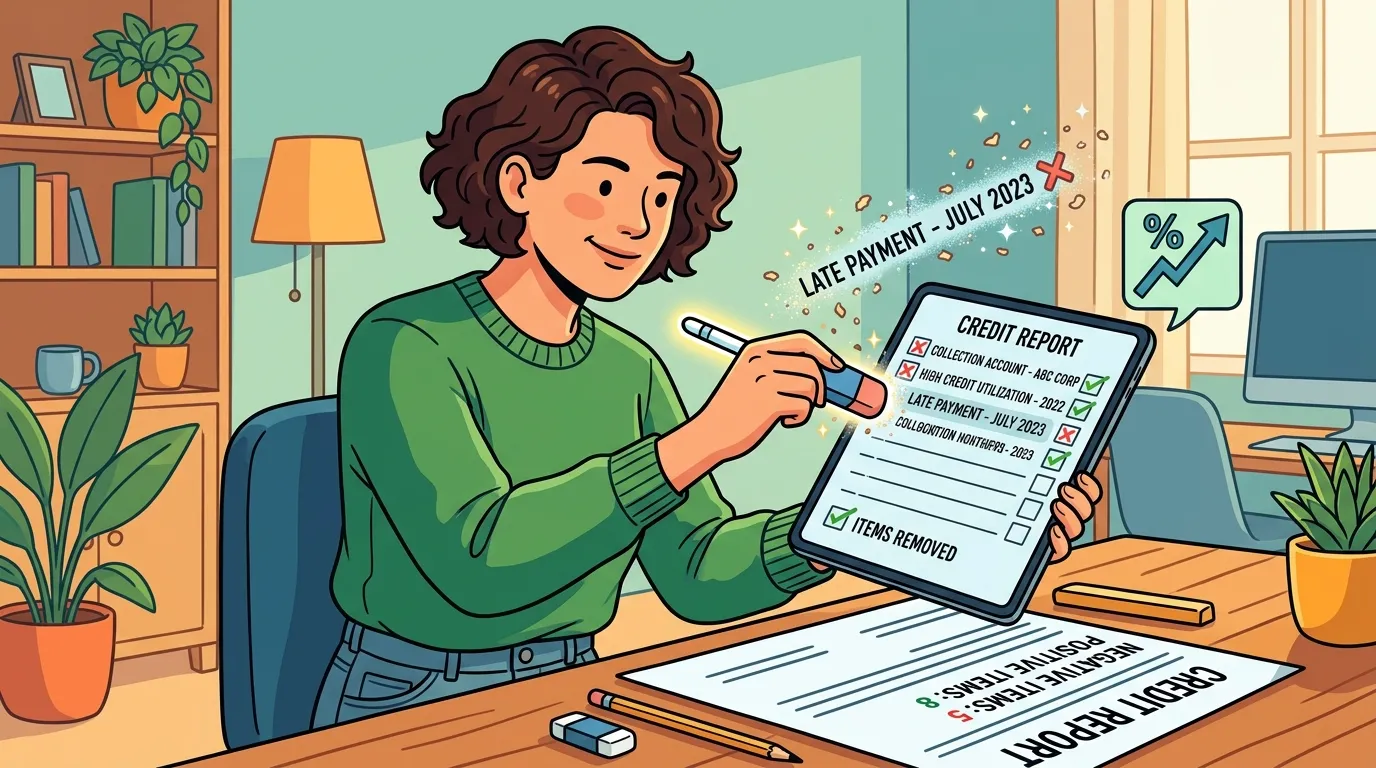
The Anatomy of a Collection Account
When an original creditor—such as a credit card issuer, hospital, or utility company—gives up on attempting to collect an unpaid balance, they typically sell that debt to a third-party collection agency. These agencies purchase bad debt for pennies on the dollar. For example, a $1,000 credit card balance might be sold to a debt buyer for just $40. The agency then attempts to collect the full $1,000 from you, resulting in a massive profit margin if successful.
When this transfer occurs, two negative marks appear on your credit report: a charge-off from the original creditor, and a new collection account from the third-party agency. Under the Fair Credit Reporting Act (FCRA), these derogatory marks can legally remain on your credit file for seven years plus 180 days from the date of the original delinquency. During this period, securing a , auto loan, or even an apartment lease becomes significantly more difficult and expensive.
However, the FCRA also mandates that all information reported to the credit bureaus must be 100% accurate and verifiable. Because debts are frequently bought and sold multiple times, critical documentation is often lost in transition. This structural weakness in the debt collection industry is your primary leverage point for having these accounts permanently deleted.
Step 1: Obtain and Audit Your Credit Reports
The removal process begins with data gathering. You cannot effectively dispute a collection account without knowing exactly what is being reported across all three major credit bureaus (Equifax, Experian, and TransUnion). Collection agencies frequently report to only one or two bureaus, or they report conflicting information across them.
By federal law, you are entitled to a free copy of your credit report from each of the three bureaus every week via AnnualCreditReport.com. Download all three reports and scrutinize the collection entries. You are looking for any discrepancy, no matter how minor. Common errors include:
- Incorrect balance amounts or unverified added fees.
- Inaccurate dates of first delinquency.
- The same debt reported twice by two different collection agencies.
- Incorrect spelling of your name or an incorrect social security number attached to the debt.
If you identify an error, document it. That discrepancy is the exact grounds you will use to file a formal dispute.
Step 2: Demand Official Debt Validation
Before you pay a cent or admit any liability, force the collection agency to prove they have the legal right to collect the money. Under the Fair Debt Collection Practices Act (FDCPA), you have the right to request debt validation within 30 days of first being contacted by a collector. Even if the 30-day window has passed, you should still request validation.
Send a certified debt validation letter via USPS with a return receipt requested. Do not sign the letter with your signature, as unscrupulous agencies have been known to transpose signatures onto fraudulent documents; type your name instead. The letter must demand proof of the original contract, a complete accounting of the balance including any added interest or fees, and proof that the agency is licensed to collect debt in your specific state.
If the collector cannot produce this documentation within 30 days, they are legally required to stop all collection efforts and must direct the credit bureaus to remove the account from your credit report.
Step 3: Dispute Inaccuracies Directly with the Bureaus
If the collection agency fails to validate the debt, or if you identified factual errors during your audit in Step 1, your next move is to dispute the account directly with the credit reporting agencies. You can file disputes online, but sending a physical letter via certified mail provides a superior paper trail.
According to the Consumer Financial Protection Bureau (CFPB), when a credit bureau receives a formal dispute, they have 30 days to investigate the claim. They do this by contacting the data furnisher (the collection agency) and requesting verification. If the collection agency cannot verify the data within that 30-day window, or if they fail to respond entirely, the credit bureau is legally obligated to delete the negative item from your report.
Because collection agencies handle thousands of accounts simultaneously, they frequently miss this 30-day window, resulting in an automatic deletion for the consumer.
Step 4: The Pay-For-Delete Negotiation Strategy
If the debt is valid, fully documented, and reported accurately, the dispute process will fail. In this scenario, paying the debt in full will update its status to "Paid Collection," but the derogatory mark will remain on your report for the remainder of the seven-year period. A paid collection still damages your FICO score under older scoring models.
The alternative is negotiating a "pay-for-delete" agreement. In this arrangement, you offer to pay a portion of the debt (often starting at 30% to 40% of the total balance) in exchange for the collector agreeing to completely erase the account from your credit file.
Because the debt buyer likely purchased your $1,000 debt for $40, offering them a $400 lump sum payment represents a 1,000% return on their investment. Many agencies will accept this deal, but you must adhere to one strict rule: Get the agreement in writing before transferring any funds. If they promise a deletion over the phone but you have no written proof, they will likely cash your check and leave the "Paid Collection" mark on your report.
Understanding the Statute of Limitations
It is vital to distinguish between the credit reporting time limit and the legal statute of limitations. As stated, a collection account drops off your credit report after seven years. However, the statute of limitations determines how long a collector has the legal right to sue you in court for the debt.
This time limit varies by state and by the type of debt, generally ranging from three to ten years. If a debt is past the statute of limitations, it is classified as "time-barred." While debt collectors can still ask you to pay a time-barred debt, they cannot successfully win a lawsuit against you. If you are sued for a time-barred debt, you must still respond to the lawsuit and present the expired statute of limitations as your defense.
What to Do If a Collector Sues You
If a collection agency files a lawsuit against you, ignoring it is the worst possible course of action. If you fail to appear in court or file a formal response, the judge will issue a default judgment in favor of the collector. A default judgment grants the agency sweeping powers to forcefully collect the money, including garnishing your wages, freezing your bank accounts, or placing a lien on your property.
Upon receiving a court summons, you have a limited window (usually 20 to 30 days) to file an answer with the court. In many cases, collection agencies lack the original documentation required to prove their case before a judge. By simply filing an answer and forcing them to produce evidence, many agencies will drop the lawsuit entirely. For substantial debt amounts, consulting with a consumer protection attorney is strongly advised.
Frequently Asked Questions (FAQs)
How long do collections stay on a credit report?
Collections stay on your credit report for up to seven years from the original delinquency date, regardless of whether you pay them or not, unless you secure a pay-for-delete agreement or successfully dispute an inaccuracy.
Does paying off a collection improve my credit score?
Under newer scoring models like FICO 9 and VantageScore 3.0, paid collections are ignored, which can lead to a score increase. However, older models (like FICO 8, which many mortgage lenders still use) continue to penalize you for a paid collection.
Will a goodwill letter work for a collection agency?
Goodwill letters—requests to remove a negative mark out of kindness—are occasionally successful with original creditors (like a bank removing a single late payment). However, they are almost never effective with third-party collection agencies, which are primarily motivated by financial settlements rather than customer retention.