What Are Sinking Funds? How to Save for Big Expenses Without Debt in 2026
Unexpected expenses often derail standard monthly budgets, leading straight to credit card debt. A sinking fund provides a strategic mechanism to systematically save for these large, predictable costs long before the bill arrives.
The Definition and Purpose of a Sinking Fund
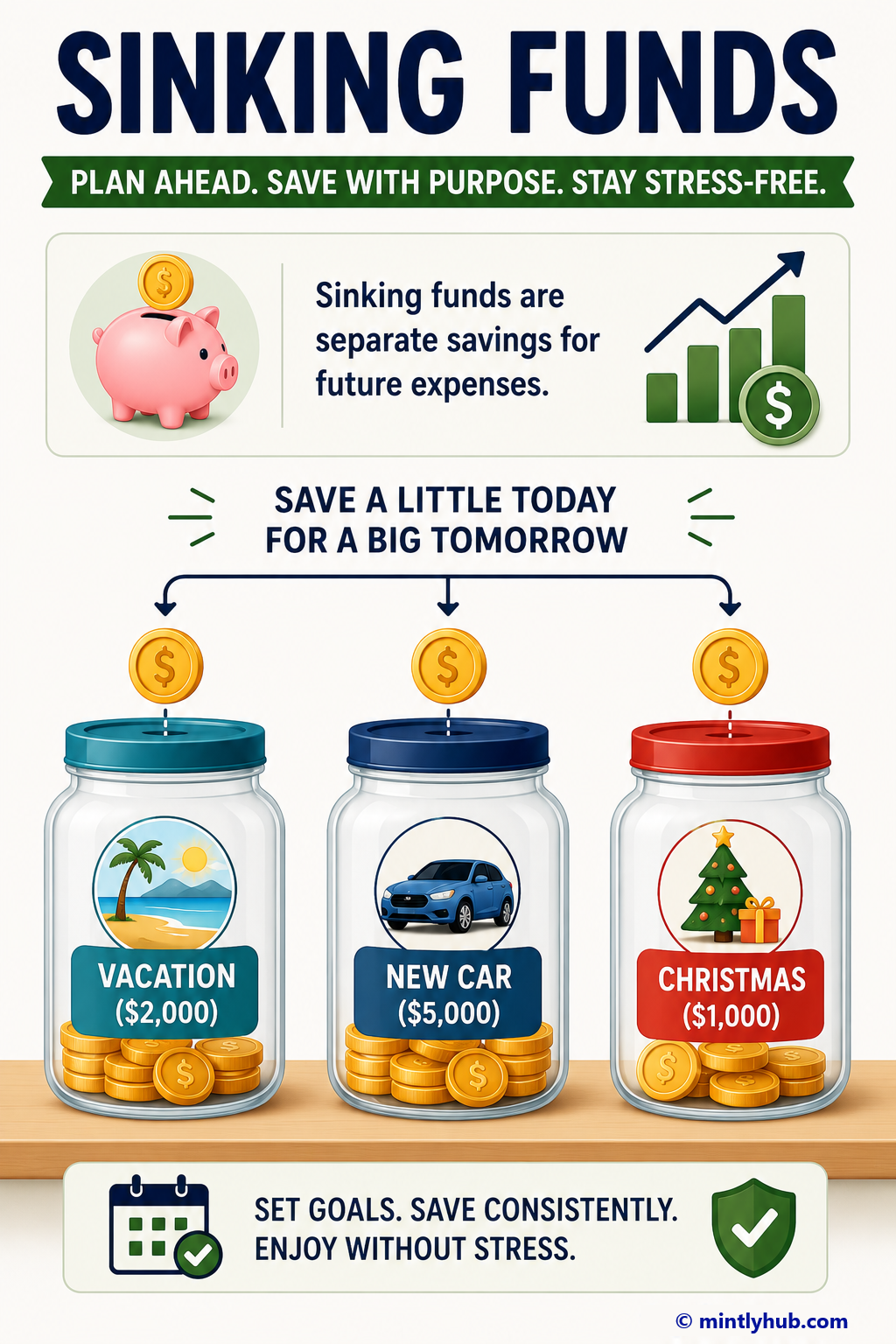
A sinking fund is a dedicated savings account or cash reserve set aside for a specific, known future expense. Unlike general savings intended for long-term wealth accumulation, sinking funds are highly targeted. You determine exactly what the money is for, how much you need, and the specific date you will spend it.
By dividing a large annual or semi-annual bill into small, manageable monthly installments, you protect your primary cash flow. This strategy prevents the shock of large expenses, ensuring you never have to rely on high-interest credit cards to cover inevitable costs like property taxes, holiday gifts, or scheduled vehicle maintenance.
Sinking Funds Versus Emergency Funds
A widespread point of confusion among consumers is distinguishing between a general emergency fund and a structured sinking fund. According to financial readiness guidelines published by the Consumer Financial Protection Bureau (CFPB), an emergency fund exists strictly for unplanned catastrophic shocks—such as sudden medical trauma or involuntary job loss.
In contrast, a sinking fund addresses inevitable household obligations. Christmas occurs on December 25th every year; it is not an emergency. Tires wearing out after 40,000 miles is a mechanical certainty, not an unexpected disaster. Relying on an emergency fund to cover these predictable events depletes the capital you need for true crises.
Common Categories for Sinking Funds
While the specific funds you need depend on your lifestyle and obligations, several categories are universally beneficial for household budgeting. Identifying these recurring expenses is the first step toward implementation.
- Annual Homeowner Obligations: Property taxes, homeowners association (HOA) dues, and routine seasonal maintenance.
- Automotive Expenses: Vehicle registration renewals, insurance premiums paid every six months, and scheduled mechanical maintenance like brake replacements.
- Personal and Family Events: Holiday gifts, annual vacations, back-to-school supplies, and milestone celebrations.
- Medical and Health Costs: Annual out-of-pocket maximums, deductible reserves, or scheduled elective procedures.
How to Calculate and Automate Your Contributions
Setting up an airtight sinking fund strategy relies on basic arithmetic. The standard formula involves dividing your targeted dollar goal across the remaining calendar months until the payment is due.
For example, if you anticipate an annual car insurance premium of $1,200 due in eight months, you divide $1,200 by 8 to arrive at a monthly contribution of $150. You can easily map out these targets using our Savings Goal Calculator.
Once you know the math, automation is critical. Set up electronic fund transfers to move the required amount from your checking account to your dedicated sinking fund accounts immediately on payday. This "pay yourself first" approach ensures the money is reserved before discretionary spending occurs.
Where to Store Your Sinking Fund Cash
Because sinking funds are intended to be spent within 3 to 24 months, putting this capital into volatile stock market equities represents significant financial risk. Market corrections could diminish your capital precisely when your bill is due. Instead, optimize for liquidity and safety.
High-Yield Savings Accounts (HYSA) are the premier vehicle for sinking funds. They offer federally insured deposits and competitive Annual Percentage Yields (APY). Many modern digital banks permit consumers to create customized sub-accounts ("buckets") named after explicit sinking targets, allowing you to track progress visually without mingling funds.
Frequently Asked Questions (FAQs)
How many sinking funds should I have?
There is no legal limit, but managing too many accounts can become administratively burdensome. Start with three to five major categories (e.g., Auto, Home, Holidays, Medical). You can consolidate smaller expenses into broader categories as needed.
What if I cannot afford to fully fund my sinking categories?
Partial funding is mathematically superior to zero funding. If your budget only allows you to save $50 a month toward a $1,200 goal, you will still have $600 cash available when the bill arrives, reducing the amount you must finance by half.
Can I keep sinking funds in a checking account?
While possible, it is not recommended. Keeping sinking funds in your primary checking account increases the risk of accidental spending. Moving the funds to a separate high-yield savings account isolates the money and earns interest.