What is a Good Credit Score in 2026?
A credit score is the primary metric financial institutions use to assess the risk of lending capital. In 2026, a of 740 qualifies borrowers for the optimal mortgage and auto loan rates. Conversely, a score of 620 typically results in borrowing costs that are a full percentage point higher—adding approximately $60,000 to the lifetime cost of a $350,000 home loan. Understanding the exact scoring scale and the operational levers to move up a bracket is fundamental to long-term wealth preservation.
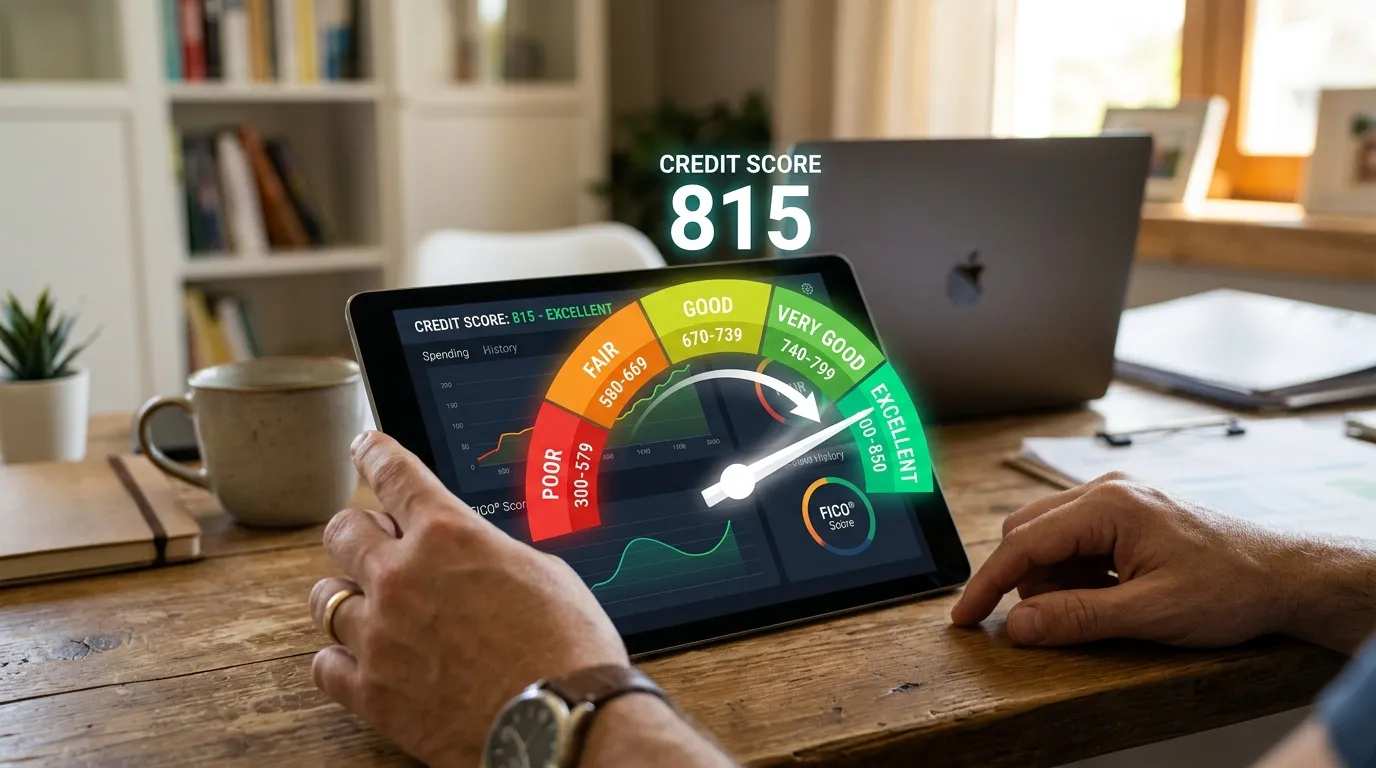
The FICO Score Ranges (2026 Edition)
The most widely utilized credit scoring model in the United States is the , developed by the Fair Isaac Corporation. While other models such as VantageScore exist, over 90% of top lenders continue to rely on FICO scores to originate mortgages, auto loans, and credit cards. The standard FICO base score ranges from a low of 300 to a maximum of 850.
Lenders stratify these scores into five distinct tiers, each carrying different borrowing implications, interest rates, and approval probabilities.
| Score Range | Rating | Financial Impact |
|---|---|---|
| 800 – 850 | Exceptional | Guarantees the lowest interest rates. Approvals are nearly automatic. |
| 740 – 799 | Very Good | Qualifies for top-tier mortgage rates and premium credit cards. |
| 670 – 739 | Good | Approved for most loans, but rates will be slightly above the prime rate. |
| 580 – 669 | Fair | Considered subprime. Subject to higher interest rates and lower limits. |
| 300 – 579 | Poor | High rejection probability. Often requires secured credit or co-signers. |
A score of 670 is broadly considered the threshold for "good" credit. However, crossing into the 740+ range is where borrowers unlock the most significant financial advantages, saving tens of thousands of dollars on long-term debt.
The Real Cost of a Fair or Poor Credit Score
Credit scores directly dictate the cost of capital. The difference between an Exceptional score and a Fair score is not merely a matter of prestige; it translates into a substantial variance in monthly cash flow and total lifetime interest paid.
When you apply for a 30-year fixed mortgage, a lender evaluates your risk profile. A borrower with a 760 score may receive an interest rate of 6.2%. A borrower with a 630 score applying for the exact same loan on the same day may receive a rate of 7.8%. On a $400,000 mortgage, the 760-score borrower pays $2,450 per month in principal and interest. The 630-score borrower pays $2,878 per month.
This premium pricing extends to auto loans and credit cards. A subprime auto loan for a used vehicle frequently carries interest rates exceeding 15% or 20%, heavily depreciating the borrower's net worth while the asset itself loses value.
The 5 Factors That Calculate Your Credit Score
The FICO scoring algorithm is proprietary, but the underlying components and their exact weightings are public information. To effectively manage a credit score, you must optimize these five variables:
- Payment History (35%): The most heavily weighted factor. Consistent, on-time payments demonstrate reliability. A single payment that is 30 days late can drop a score by up to 100 points instantly.
- Credit Utilization (30%): The ratio of your current revolving debt to your total available credit limits. Lower utilization strongly correlates with higher credit scores.
- Length of Credit History (15%): The average age of all your open accounts, plus the age of your oldest and newest accounts. Keeping older accounts active stabilizes your score.
- Credit Mix (10%): Lenders prefer to see that a borrower can manage different types of debt simultaneously, such as installment loans (mortgages, auto loans) and revolving credit (credit cards).
- New Credit (10%): Opening multiple new accounts in a short timeframe signals elevated risk. Each hard inquiry temporarily reduces your score by a few points.
Understanding the Credit Utilization Ratio
Because Credit Utilization constitutes 30% of a FICO score, it is the most actionable lever for rapid score improvement. Utilization is calculated by dividing your total outstanding credit card balances by your total available credit limits.
If you hold a credit card with a $10,000 limit and carry a $4,000 balance, your utilization ratio for that card is 40%. The algorithm calculates utilization both on an individual card basis and aggregately across all your revolving accounts.
To maintain a Very Good or Exceptional score, the standard industry guideline dictates keeping your utilization below 30%. However, to maximize the scoring model, borrowers should target a utilization rate below 10%. Crucially, utilization is typically reported to the credit bureaus on the statement closing date, not the payment due date. Therefore, paying your balance in full before the statement actually generates ensures a 0% to 1% utilization is reported, optimizing the score.
The Fastest Strategies to Improve Your Score
If your score falls below the 740 threshold, implementing specific, targeted actions can yield improvements within 30 to 60 days. Unlike Payment History, which requires time to build, other factors can be manipulated rapidly.
First, aggressively pay down revolving balances to lower your utilization ratio. If you cannot pay down the balance immediately, contact your credit card issuer and request a credit limit increase. If approved without a hard inquiry, this instantly lowers your utilization percentage by expanding the denominator.
Second, implement automated payments for the minimum amount due on every account you own. This acts as a failsafe to ensure you never accidentally incur a 30-day late mark due to administrative oversight. You can then make manual payments for larger amounts.
Third, become an authorized user on an established account. If a family member possesses a credit card with a long history of on-time payments and a low utilization rate, being added as an authorized user imports that account's positive data directly onto your credit file. You do not need physical access to the card to benefit from the reporting.
How Long Do Negative Marks Stay on Your Report?
Recovering from a damaged credit score requires an understanding of reporting timelines mandated by the Fair Credit Reporting Act (FCRA). Negative data points do not permanently scar a credit profile, but they do suppress scores for years.
Late payments (30, 60, or 90 days past due) remain on a credit report for exactly seven years from the date of the original delinquency. However, the algorithmic impact of a late payment diminishes significantly as it ages. A late payment from four years ago suppresses a score far less than a late payment from two months ago.
Collection accounts and charge-offs also remain for seven years. Bankruptcies carry a longer penalty phase. A Chapter 13 bankruptcy (which involves a repayment plan) stays on a report for seven years, while a Chapter 7 bankruptcy (total liquidation) remains visible for up to ten years. In all cases, aggressively building a matrix of positive payment history on new or surviving accounts accelerates score recovery. For further details on consumer rights, consult the official resources provided by the CFPB.
Frequently Asked Questions (FAQs)
Does checking my own credit score lower it?
No. Checking your own credit score or report is classified as a "soft inquiry" (or soft pull). Soft inquiries have absolutely no impact on your credit score, regardless of how frequently you check it. Only "hard inquiries" initiated by a lender when you apply for new credit affect your score.
Why do I have different credit scores?
You have dozens of different credit scores. The three major credit bureaus (Equifax, Experian, TransUnion) may possess slightly different data on your file. Furthermore, FICO produces different scoring models optimized for specific industries (e.g., FICO Auto Score, FICO Bankcard Score). A lender sees the specific score they purchase.
Will paying off a collection account remove it from my report?
Standard practice dictates that paying a collection account updates its status to "Paid Collection," but the negative mark remains on your report for the full seven-year timeline. However, newer scoring models (like FICO 9 and VantageScore 3.0) ignore collection accounts with a zero balance. You can also attempt to negotiate a "pay-for-delete" agreement with the collection agency prior to payment.
Should I close an old credit card to improve my score?
Closing an old credit card almost never improves a credit score and typically harms it. Closing the account immediately reduces your total available credit, which instantly spikes your credit utilization ratio. Over time, the closed account will fall off your report, reducing your average age of accounts. The mathematically sound approach is to keep old accounts open with a zero balance.