What is a FICO Score? (How the 300–850 Credit Rating Works in 2026)
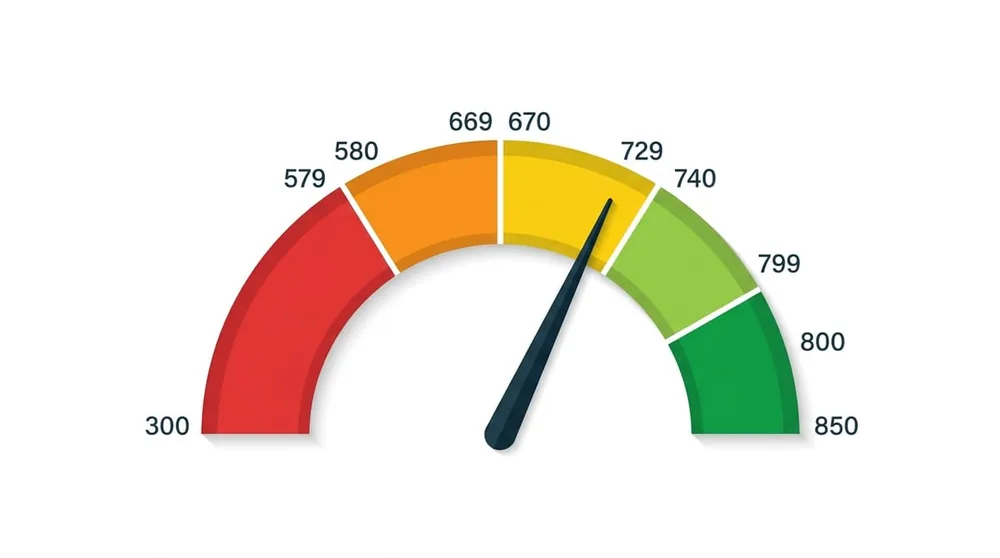
Your FICO score is a 3-digit number from 300 to 850 that over 90% of top U.S. lenders use to decide loan approvals and interest rates. Created by Fair Isaac Corporation in 1989, it is calculated from 5 behavioral factors. A score of 740 unlocks the best mortgage rates; a score of 640 can cost you over $135,000 more in interest over a 30-year loan. Here is exactly how it is calculated and how to move it up.
⚡ Action Checklist: 4 Blueprint Moves to Reconstruct Your FICO Score
Whether rebuilding from blemishes or striving for an 800+ rating, execute these four high-impact scoring habits:
- ✔Automate Minimum Payments on Every Account: Payment history represents an overwhelming 35% of your total score. Set up automatic clearing house (ACH) auto-pay for at least the minimum amount due so you never suffer a destructive 30-day delinquency mark!
- ✔Maintain Credit Utilization Below 10%: While 30% is the recognized boundary, consumers holding elite 800+ FICO scores carry an average revolving credit utilization ratio below **7% of available credit lines**.
- ✔Keep Your Oldest Credit Accounts Active: Length of credit history comprises 15% of your score. Never close your very first credit card; buy a small cup of coffee on it once every six months to keep the institutional account clock running!
- ✔Audit Your Annual Reports for Errors: Over 20% of American credit reports contain inaccurate negative blemishes. Pull your statutory reports via AnnualCreditReport.com and formally dispute unverified collection accounts!
1. The 5 Pillars of the FICO 8 & FICO 10 Algorithm
When Experian, Equifax, and TransUnion transmit your raw consumer data into Fair Isaac Corporation algorithms, the scoring engine weighs five exact behavioral components to construct your 300–850 rating:
- Payment History (35% Weight): The highest-weighted factor. Lenders want verifiable confirmation that you honor commitments. A single late payment exceeding 30 days past due can drop a strong score by up to 100 points overnight.
- Amounts Owed & Credit Utilization (30% Weight): Evaluates your revolving debt burden. As explored in our deep dive on Credit Utilization Ratios, borrowing near your assigned card spending ceilings signals financial distress to lenders.
- Length of Credit History (15% Weight): Measures the average age across all your open accounts, alongside the duration since your oldest active account was established.
- Credit Mix (10% Weight): Algorithms reward consumers who successfully manage diverse financing types simultaneously — both revolving credit (credit cards) and fixed installments (mortgages or auto loans).
- New Credit & Hard Inquiries (10% Weight): Submitting numerous credit card applications within a compressed 90-day window triggers multiple hard inquiries, temporarily depressing your score.
According to consumer lending rights published by the Consumer Financial Protection Bureau (CFPB), you have a legally codified federal right to know your credit score whenever a lending institution rejects an application or charges an elevated interest rate based on bureau records.
📊 Real-Life Case Study: Marcus vs. Chloe on a $350,000 Mortgage
To grasp how profoundly your FICO score dictates real-world household wealth in 2026, observe two neighbors, Marcus and Chloe, applying for identical **$350,000 fixed 30-year residential home mortgages** on the exact same afternoon:
Marcus: FICO Score of 640 (Fair/Subprime)
• Assigned Mortgage Interest Rate: 7.85% APR
• Monthly Principal & Interest: $2,532/mo
• Total Payments over 30 Years: $911,520
• Lifetime Interest Paid to Bank: $561,520!
Chloe: FICO Score of 790 (Excellent/Prime)
• Assigned Mortgage Interest Rate: 6.25% APR
• Monthly Principal & Interest: $2,155/mo
• Total Payments over 30 Years: $775,800
• Lifetime Interest Paid to Bank: $425,800
Takeaway: Chloe pays -$377 less every month and saves a staggering **$135,720 in lifetime borrowing costs**, solely because her superior FICO rating unlocked discounted tier pricing!
2. FICO vs. VantageScore (Understanding Credit Brands)
When monitoring consumer apps and banking dashboard portals, you will occasionally see a credit rating labeled **VantageScore 3.0 or 4.0** rather than an official FICO rating. Why are there two brands?
While FICO is an independent software corporation, VantageScore was jointly created in 2006 directly by the three major credit bureaus (Experian, TransUnion, and Equifax) to compete against FICO's monopoly. Although both frameworks utilize an identical **300 to 850 numerical scale**, their underlying weighting formulas deviate slightly: VantageScore places heavier weight on recent overall revolving debt trends and can score a new borrower with just one month of account history, whereas traditional FICO requires at least six months of consecutive credit data before generating an official rating.
For authoritative guidance on locating exact score tier breakdowns, visit our reference article on What is a Good Credit Score in 2026, or evaluate how credit profiles alter consolidation strategies in our breakdown on Getting a Personal Loan with Bad Credit.
Frequently Asked Questions (FAQ)
Why do I have three slightly different FICO scores across Experian, TransUnion, and Equifax?
The three major national credit bureaus operate as totally independent commercial enterprises; they do not automatically synchronize databases every evening. Certain creditors might report monthly balances or loan accounts solely to Experian while skipping TransUnion. Because the raw data inputs inside each bureau vault vary slightly on any given afternoon, running the exact same FICO mathematical formula across three distinct data vaults generates three slightly varied numerical scores!
Does checking my own FICO score reduce my credit rating?
Never. When a consumer logs into a credit monitoring portal or checks their bank app to view their personal credit profile, the credit bureaus record the action as a "soft inquiry." Soft credit pulls are completely ignored by FICO algorithms and cause absolute zero impact to your score. Conversely, formal loan applications submitted to lenders trigger score-impacting "hard credit pulls."
How long do late payment blemishes and collections remain on my FICO report?
Under the statutory constraints of the Fair Credit Reporting Act (FCRA), standard delinquency marks, collection accounts, and repossessions remain legally visible on your credit bureau reports for up to **7 years from the date of original default**. Chapter 7 bankruptcy public records can linger for up to **10 years**. However, as a negative blemish grows chronologically older, its damage weight inside modern FICO scoring algorithms systematically deteriorates!