Emergency Fund Calculator
Find out exactly how much you need in your emergency fund — and how long it'll take to get there. Based on your real monthly expenses and situation.
Quick Breakdown
Fill in your details and click Calculate to see your personalized emergency fund target.
How This Calculator Works
We use the standard emergency fund formula used by certified financial planners (CFPs):
Source: CFP Board standard guidance. Investopedia "Emergency Fund" definition. The 3–6 month rule is endorsed by the Consumer Financial Protection Bureau (CFPB).
Common Questions
How many months of expenses should I save?
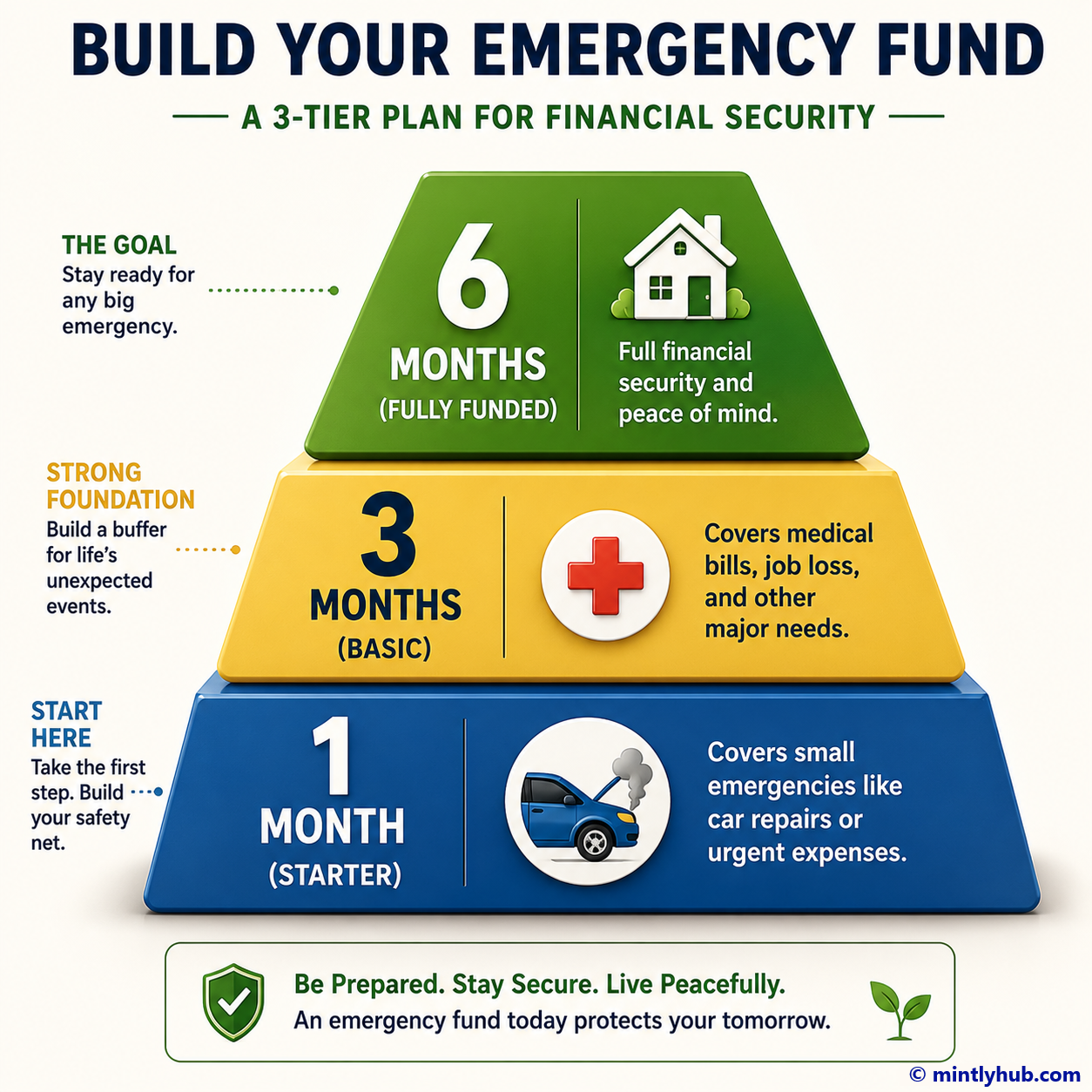
The standard recommendation is 3–6 months for most employed individuals. However:
- 3 months: Dual-income household, very stable job, no dependents
- 6 months: Single income, average job stability — the most common recommendation
- 9–12 months: Self-employed, freelancer, commission-based income, or single parent
Where should I keep my emergency fund?
Your emergency fund should be in a liquid, low-risk account — not invested in stocks. Best options:
- High-Yield Savings Account (HYSA): Best choice — earns 4–5% APY (as of 2026) while staying accessible
- Money Market Account: Similar to HYSA, often with check-writing access
- Regular savings account: Lower yield but FDIC insured and accessible
Avoid: CDs (locked in), stocks (too volatile), checking accounts (no yield).
What counts as an essential monthly expense?
Include these in your monthly expenses calculation:
- Rent or mortgage payment
- Utilities (electric, gas, water, internet)
- Groceries and basic household supplies
- Health, auto, and renter's/homeowner's insurance
- Minimum debt payments (student loans, car payment, credit cards)
- Basic transportation (gas, public transit)
- Essential phone plan
Exclude: Dining out, streaming services, gym, vacation, clothing, entertainment.
Should I build an emergency fund before paying off debt?
Yes — most financial experts recommend building a starter emergency fund of $1,000 first, before aggressively paying off debt. Here's why:
- Without any emergency savings, an unexpected expense forces you back into debt
- $1,000 covers most common emergencies (car repair, minor medical bill)
- After debt is paid off, build your full 3–6 month emergency fund
This is the approach recommended by Dave Ramsey's Baby Steps and many CFPs.
Want to understand emergency funds deeply?
Read our full guide — covers how to build your fund step-by-step, where to keep it, and the biggest mistakes to avoid.