The 50/30/20 Budget Rule: How It Works and How to Apply It
The 50/30/20 rule is the most popular budgeting framework in the US for a simple reason: it works without a spreadsheet. One number — your take-home income — splits automatically into needs, wants, and savings. This guide shows you exactly how to apply it, what to do when it doesn't fit your life perfectly, and how to use it to build real financial momentum.
What Is the 50/30/20 Rule?
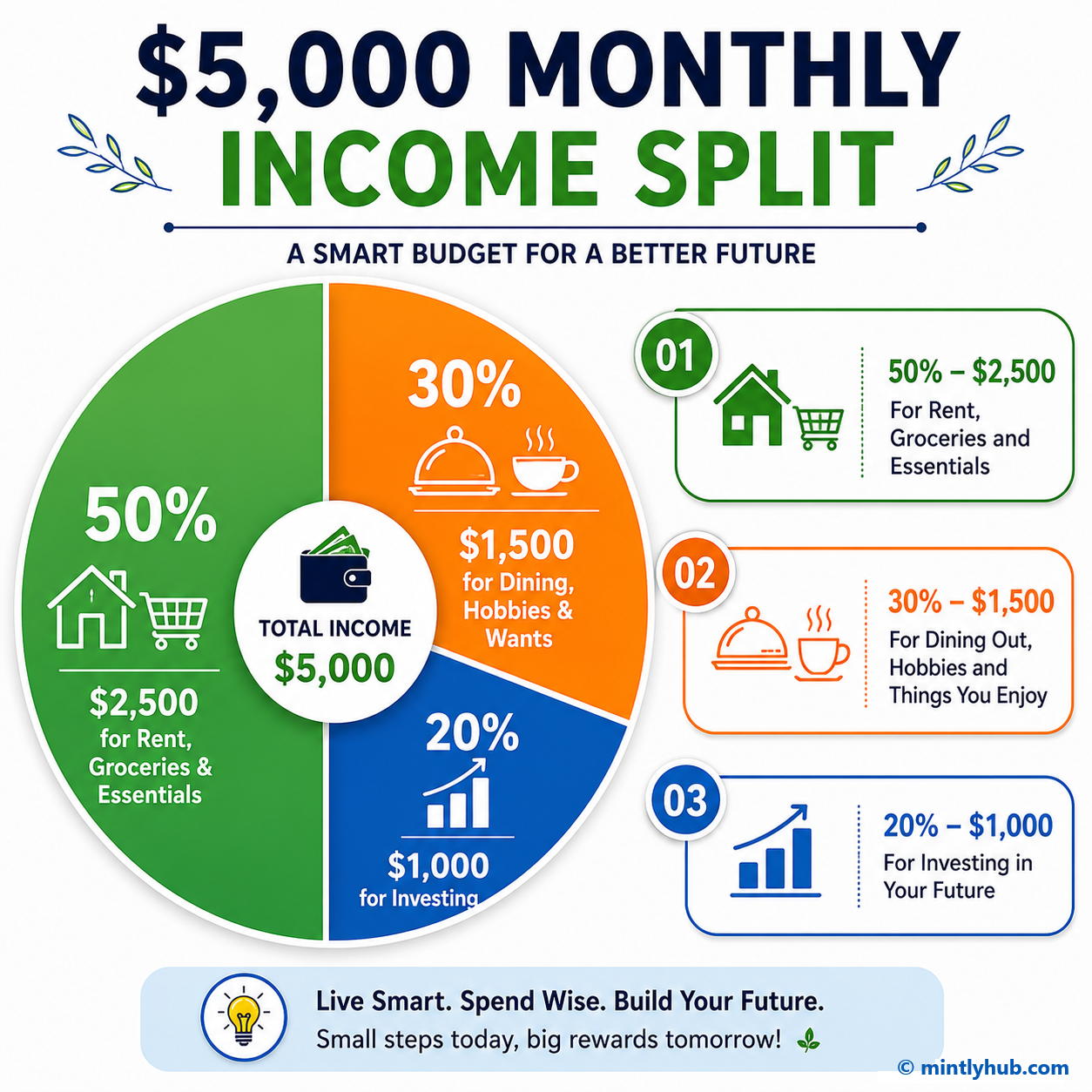
The 50/30/20 rule is a budgeting framework that divides your after-tax incomeinto three categories:
That's it. No tracking every coffee, no 47 budget categories, no spreadsheet with conditional formatting. One income, three buckets, clear targets.
Where It Came From
The 50/30/20 rule was popularized by Senator Elizabeth Warren and her daughter Amelia Warren Tyagi in their 2005 book "All Your Worth: The Ultimate Lifetime Money Plan."Warren, a Harvard bankruptcy law professor at the time, based the framework on years of research into American household finances and bankruptcy patterns.
The framework has since been adopted and promoted by theConsumer Financial Protection Bureau (CFPB) and is now the most widely taught budgeting method in US personal finance education.
Its appeal: it's flexible enough for different income levels, doesn't require obsessive tracking, and provides guardrails rather than rigid rules.
How to Apply the 50/30/20 Rule Step-by-Step
Calculate Your Monthly Take-Home Income
Find your actual after-tax monthly income. If you're salaried: check your pay stub for net pay and multiply by pay periods per month. If paid biweekly: (net pay × 26) ÷ 12. If self-employed: use your average monthly net income after estimated taxes.
Calculate Your Three Targets
Multiply your take-home income by each percentage:
Use our calculator to get these instantly.
Categorize Your Current Spending
Pull your last 2–3 months of bank and credit card statements. Assign every expense to Needs, Wants, or Savings. Be honest — a gym membership is a want, not a need, even if you use it daily.
Compare Actuals to Targets
Now you know where you stand. Most people find they're under on savings and over on wants. The gap between target and actual is your action item — not a judgment.
Automate the 20% Savings First
Set up automatic transfers on payday — 20% goes directly to savings/investments before you can spend it. This is the single highest-leverage action in personal finance: pay yourself first, spend the rest.
Review Monthly, Adjust Quarterly
Check actual vs. target each month (takes 10 minutes). Do a deeper review quarterly — categorize, look for drift, adjust for income changes. The 50/30/20 rule is a compass, not a cage.
How to Classify Needs vs. Wants
This is the hardest part of the 50/30/20 rule — and where most people get it wrong. The test: if you lost your income today, would you still have to pay this?
| Expense | Category | Why |
|---|---|---|
| Rent / mortgage payment | Need | Essential housing |
| Basic groceries | Need | Essential nutrition |
| Health insurance premium | Need | Essential coverage |
| Minimum debt payments | Need | Contractual obligation |
| Electric, gas, water | Need | Essential utilities |
| Basic phone plan | Need | Essential communication |
| Dining out / restaurants | Want | Food choice, not necessity |
| Netflix, Spotify, etc. | Want | Entertainment, not essential |
| Gym membership | Want | Could exercise for free |
| Upgraded phone plan | Want | Premium above basic is a want |
| Clothing (beyond basics) | Want | Style choice, not necessity |
| Vacation / travel | Want | Discretionary |
| Emergency fund contributions | Savings | Future security |
| 401(k) / IRA contributions | Savings | Retirement building |
| Extra debt payments (above minimum) | Savings | Reduces future obligations |
What If 50% Isn't Enough for Needs?
This is the most common problem people hit with the 50/30/20 rule — especially in high cost-of-living cities like New York, San Francisco, Seattle, or Boston. If rent alone takes 40–45% of your take-home, reaching 50% for all needs is impossible.
What to do when your needs exceed 50%:
Audit your "needs" for hidden wants
Be ruthless. Premium subscriptions categorized as needs, a car payment for a vehicle you don't need for work, gym membership, meal kit services — move these to wants. Your true needs may be lower than you think.
Compress the wants category first
If needs genuinely exceed 50%, reduce the wants bucket — not the savings bucket. A 60/20/20 split protects savings. A 60/30/10 split sacrifices your future for present comfort — avoid this.
Treat 20% savings as non-negotiable
Even if your split ends up 65/15/20, protect the 20%. The savings category is building your financial future — it's the last thing to cut, not the first.
Work on the income side long-term
If your needs genuinely can't fit in 50% even with cuts, the long-term solution is income growth — skills, promotions, side income — not permanently running a distorted budget.
How to Break Down the 20% Savings
The 20% savings bucket isn't just one thing. Here's the recommended priority order for allocating your savings:
Starter Emergency Fund ($1,000)
Before anything else — get $1,000 liquid in a savings account. This prevents small emergencies from derailing everything.
Employer 401(k) Match
If your employer matches 401(k) contributions, contribute at least enough to get the full match. This is a 50–100% instant return — nothing beats it.
High-Interest Debt Payoff
Credit card debt at 20%+ APR is a guaranteed 20% return to pay it off. Eliminate high-interest debt aggressively.
Full Emergency Fund (3–6 months)
Build your complete emergency fund in a High-Yield Savings Account. Use our Emergency Fund Calculator to find your target.
Max Roth IRA / Traditional IRA
Contribute up to the annual limit ($7,000 in 2026, $8,000 if 50+). Tax-advantaged retirement savings are among the best long-term wealth builders available.
Max 401(k) / Additional Investing
If you still have savings capacity, max your 401(k) ($23,500 in 2026) and invest in taxable brokerage accounts.
How to Adjust the Rule for Your Situation
| Situation | Suggested Split | Rationale |
|---|---|---|
| Standard employed, stable income | 50 / 30 / 20 | Standard recommendation |
| High cost-of-living city | 60 / 20 / 20 | Compress wants, protect savings |
| Aggressive debt payoff mode | 50 / 20 / 30 | Extra 10% toward debt |
| Aggressive savings / FIRE goal | 50 / 20 / 30 | Extra 10% toward investments |
| Temporarily tight income | 60 / 20 / 20 | Minimum savings, survive then grow |
| Very high income (low needs %) | 30 / 20 / 50 | Supercharge savings when possible |
The 50/30/20 split is a starting point, not a law. What matters is that you have intentional targets and review them regularly. A personal budget that you actually follow beats a perfect budget you ignore.
Common 50/30/20 Mistakes to Avoid
Using gross income instead of take-home
The 50/30/20 rule uses after-tax income. Using your gross salary makes all three targets 20–30% too high — your budget will never add up.
Calling wants "needs" to justify spending
HBO Max isn't a need. A car lease on a luxury vehicle has a want component. Honest categorization is what makes the system work.
Cutting savings before wants when budgets are tight
When money is tight, the instinct is to skip the retirement contribution. This is the worst order. Cut wants first, always protect the savings bucket last.
Setting it and forgetting it
A budget needs a monthly check-in — even 10 minutes. Lifestyle inflation silently grows your wants category over time without a review habit.
Not automating the savings
If the 20% savings stays in your checking account "waiting to be transferred," it gets spent. Automate transfers on payday — make it the default, not a decision.
Bottom Line
The 50/30/20 rule works because it's simple enough to actually use. It doesn't require tracking every purchase — it requires knowing one number (your take-home income), doing three multiplications, and checking in monthly.
Start with the calculator, compare your current spending to the targets, and automate the 20% savings. Those three actions, done this week, will put you ahead of most Americans.