How to Pay Off Student Loans Fast in 2026 — 5 Strategies That Work
Pay off student loans faster using the avalanche method, bi-weekly payments, and employer assistance. Includes exact math on how each strategy cuts years off your payoff.
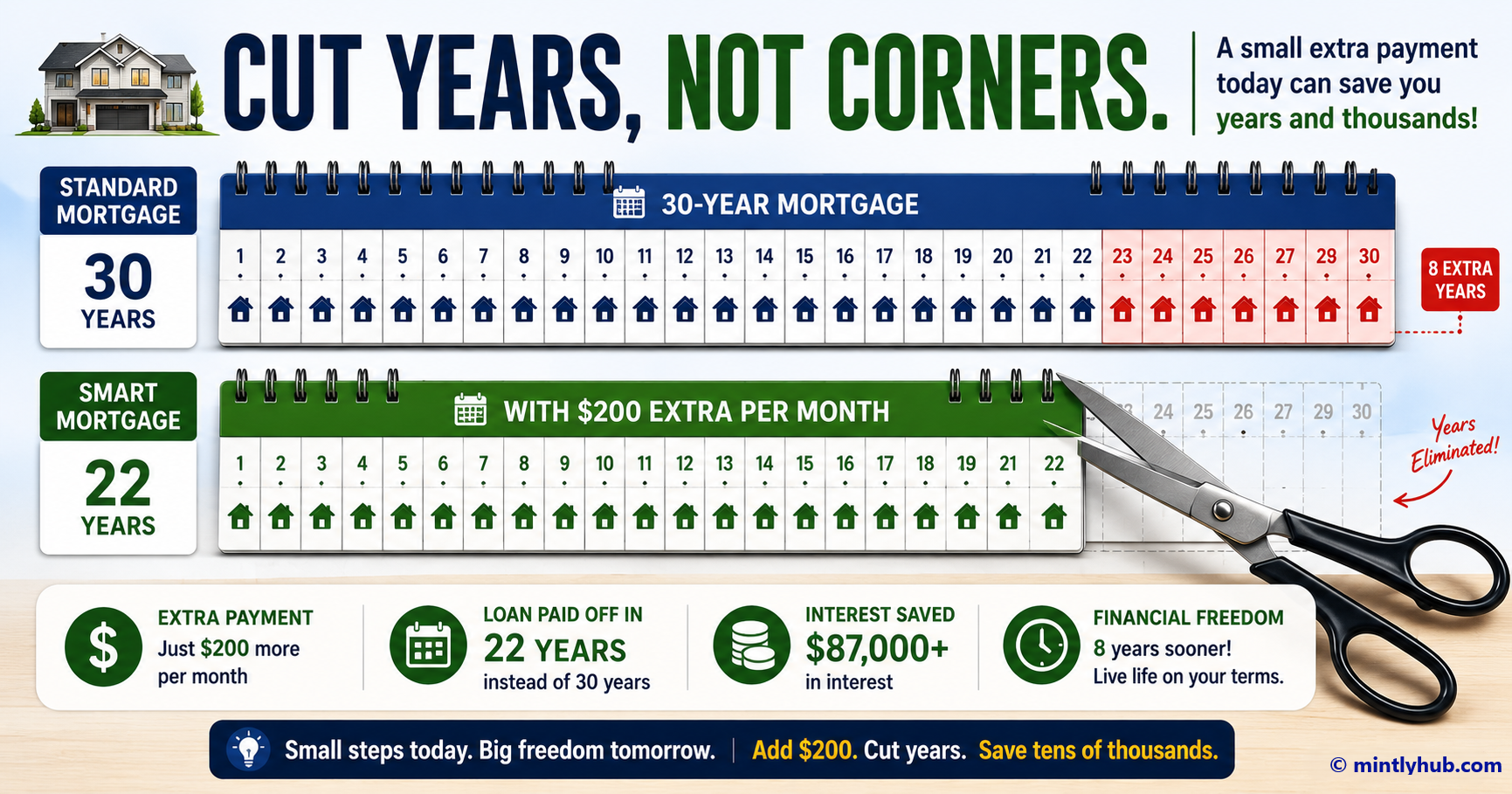
Learning precisely how to pay off student loans fast in 2026 empowers recent graduates and career professionals to reclaim tens of thousands of dollars in unearned bank interest and accelerate personal net worth growth. With educational borrowing rates hovering at multi-decade highs, passively making standard 10-year minimum payments guarantees an expensive financial uphill battle.
Fortunately, strategic repayment architecture allows borrowers to systematically compress payoff timelines without sacrificing everyday financial stability. Whether you hold federal Direct Subsidized loans or commercial private student debt, mastering principal acceleration techniques transforms seemingly intimidating balances into manageable financial milestones.
1. Target Principal with Automated Bi-Weekly Remittances
Directing extra payments toward your loan principal balance is the most direct way to shorten your student debt timeline. Most student loan servicers accrue simple interest on a daily compounding cycle. When you divide your scheduled monthly obligation in half and process disbursements bi-weekly, you execute 26 half-payments per year—equaling exactly 13 full monthly payments annually.
According to student repayment guidelines issued by the Consumer Financial Protection Bureau (CFPB), you must actively verify in writing that your loan servicing provider allocates voluntary overpayments straight toward principal reduction rather than pre-paying future scheduled interest installments. Test how an extra $50 or $100 per month truncates your amortization schedule using our interactive Student Loan Payoff Calculator.
2. Actionable Student Loan Acceleration Checklist
To execute a high-speed repayment blueprint without accidentally forfeiting vital federal lending protections, step through our systematic debt elimination checklist:
📋 5-Step Student Debt Acceleration Checklist
- ✔️Enroll in Autopay for Interest Discounts: Activate automatic bank debiting with your loan servicer; over 90% of institutions reward automated enrollments with an immediate 0.25% APR rate deduction.
- ✔️Deploy the Debt Avalanche Strategy: Sort your educational loans from highest interest rate to lowest; concentrate extra surplus funds entirely on the highest APR balance first to minimize lifetime charges.
- ✔️Claim Employer Tuition & Repayment Matching: Check if your human resources benefits package offers tax-free student loan matching under current Section 127 educational assistance legislation (up to $5,250 per year).
- ✔️Reallocate Performance Bonuses & Tax Refunds: Commit at least 50% of annual wage promotions, commission windfalls, or tax refunds toward lump-sum principal reductions.
- ✔️Assess Refinancing on Private Debt Only: Replace high-interest private educational balances with lower private market rates, but avoid refinancing federal direct loans if you need income-driven forgiveness protections.
3. Real-Life Scenario: The Power of Extra Principal Payments
To grasp how modest monthly surplus commitments dramatically alter debt trajectory, review this verified repayment case study modeled on our Student Loan Payoff Calculator:
💡 Case Study: Emily’s $32,000 Loan Payoff Triumph
Upon university graduation, Emily carries a consolidated student debt load of $32,000 at an average 6.8% APR under a standard 10-year (120-month) repayment schedule. Her required minimum monthly billing amounts to $368.25. By restructuring her living expenses with our 50/30/20 Budget Calculator, she uncovers an extra $150 per month to dedicate directly toward principal.
Total Interest Owed: $12,190
Total Interest Owed: $7,390
4. Refinancing vs. Federal Consolidation: Know the Rules
If your student loan interest rate exceeds 7%, applying for commercial loan refinancing through a private institution can significantly compress borrowing expenses. However, borrowers must distinguish private refinancing from federal direct debt consolidation.
According to instructional repayment bulletins distributed by the U.S. Department of Education at StudentAid.gov, transitioning federal loans into a commercial private refinance contract permanently strips away federal statutory protections, including Public Service Loan Forgiveness (PSLF) and Income-Driven Repayment (IDR) safety nets. For a deeper comparative breakdown of debt elimination techniques, review our guide on Debt Snowball vs. Debt Avalanche Strategies.
❓ Frequently Asked Questions About Student Loan Repayment
Do extra payments automatically reduce my next monthly billing amount?
No. By default, many commercial loan servicers apply surplus lump-sum payments toward "advancing your due date," meaning they pre-pay future scheduled installments without reducing your underlying principal faster. You must instruct your servicer to apply all voluntary overpayments immediately toward principal reduction while keeping your regular monthly billing active.
Does paying off student loans early damage my FICO credit score?
When you pay off a student loan completely, that specific credit account is closed, which can cause a minor, temporary dip of 5 to 15 points in your credit score due to a slightly shortened active credit account age. However, establishing debt-free financial freedom and lowering your debt-to-income ratio significantly overrides this negligible short-term fluctuation.
Should I invest in my 401(k) or pay off student loans first?
Always contribute enough to your workplace 401(k) to capture 100% of your employer's matching contribution before accelerating student loan payoff, as an employer match represents an immediate 100% risk-free return. Once your match is secured, allocate excess cash flows toward paying off student loans that bear interest rates above 6%.