What is Loan Principal? (How Debt Paydown Works in 2026)
In consumer lending and institutional banking contracts, your loan principal represents the foundational core of your debt: it is the exact, original sum of money you initially borrowed from a lending institution, or the actual remaining balance of that original loan amount still outstanding today—completely stripped of any accrued interest charges, origination fees, or servicing penalties. Whether you take out a $350,000 home mortgage, a $30,000 auto financing agreement, or deposit $10,000 into an investment vehicle, the term "principal" simply denotes your baseline capital. Because banking algorithms calculate monthly interest fees directly against your remaining loan principal, systematically reducing your principal balance is one of the most effective strategies to eliminate debt years ahead of schedule.
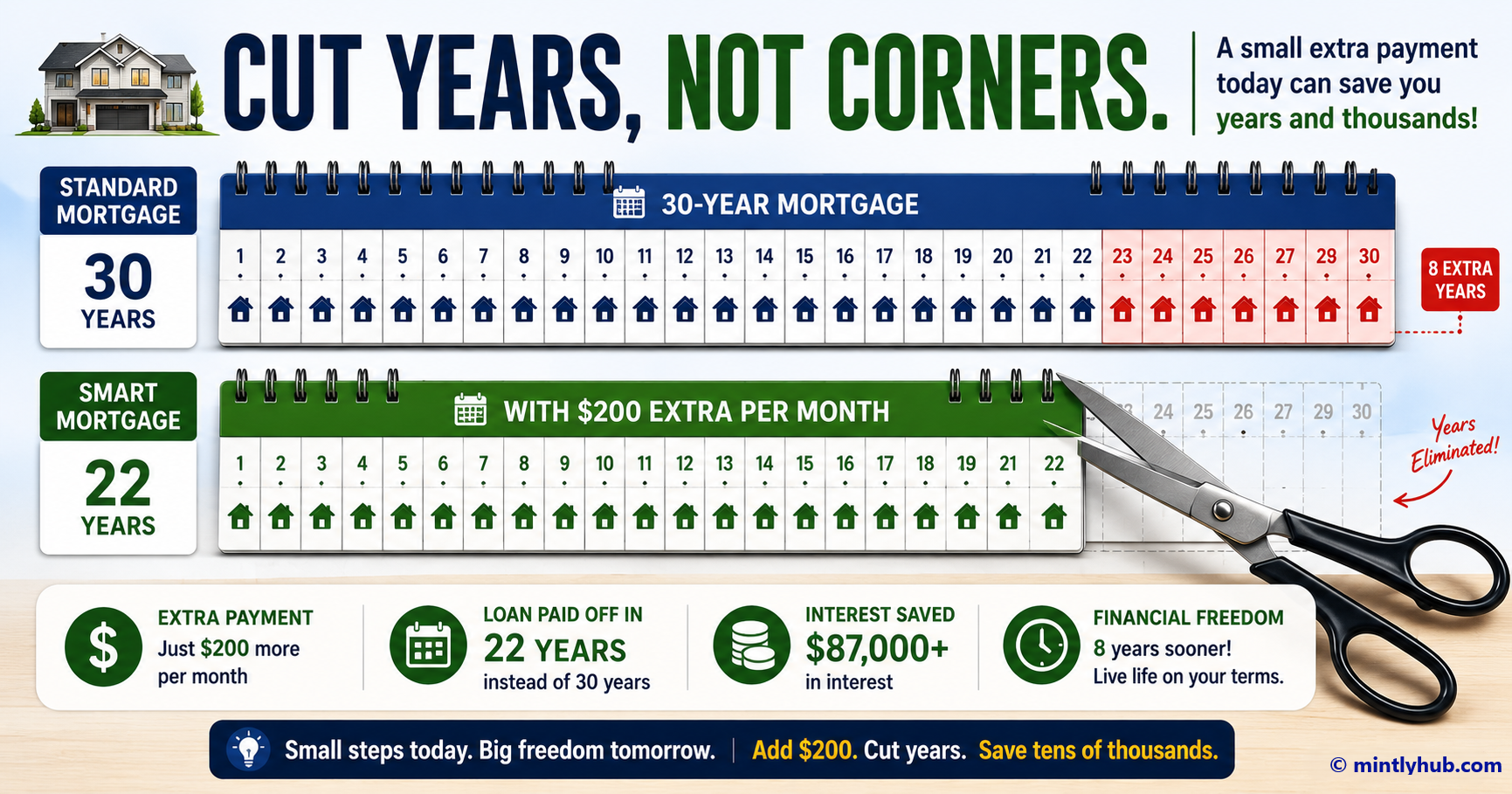
⚡ Action Checklist: 4 Blueprint Tactics to Demolish Loan Principal
Do not let your cash get consumed purely by interest expenses. Execute these four principal-reduction moves:
- ✔Always Specify "Apply to Principal": When submitting extra cash to your auto or mortgage lender, explicitly instruct the servicer online or in writing to apply the remittance "Exclusively to Principal" rather than pre-paying next month's scheduled bill.
- ✔Adopt a Bi-Weekly Payment Structure: Split your monthly mortgage installment in half and pay every two weeks. Because there are 52 weeks in a year, you automatically make 26 half-payments—equaling **13 full monthly payments**—shaving years off principal!
- ✔Round Up Monthly Installment Payments: If your monthly car payment is $463, round up your automated clearing house payment to an even $500. That modest $37 monthly surplus directly attacks underlying loan principal!
- ✔Check for Prepayment Penalty Clauses: Before making lump-sum principal contributions, inspect your contract disclosures to confirm your lending institution does not charge a fee for early debt extinguishment.
1. How Principal Interacts with Amortization Schedules
In traditional institutional lending agreements (such as mortgages or installment notes), your monthly repayment obligation is strictly structured by an internal **Amortization Table**. Because commercial banks calculate your monthly interest fee against your outstanding revolving principal balance on the exact day of billing, early loan payments consist almost entirely of interest profit for the bank.
As documented by lending education resources from the Consumer Financial Protection Bureau (CFPB), understanding the direct relationship between principal and interest is critical: every single dollar of extra principal you extinguish early in a loan's lifespan permanently destroys the compounding basis upon which future bank interest fees are calculated!
When you reduce your underlying loan principal, you do not immediately change the required billed amount of next month's payment (unless you request a formal mortgage loan recast). Instead, your principal paydown dramatically compresses the backend duration of your repayment schedule, bringing your ultimate debt freedom date years closer to reality.
📊 Real-Life Case Study: Greg’s $100/Month Principal Hack
Greg holds a $300,000 fixed-rate home mortgage at a 6.50% interest rate over a 30-year term (360 payments). His required monthly principal and interest payment is exactly $1,896 per month. Let's inspect the shocking financial transformation if Greg adds just **$100 extra per month**, designated strictly toward loan principal paydown:
Standard 30-Year Schedule (No Extra Principal)
• Monthly Payment: $1,896
• Time to Full Debt Payoff: 30 Years (360 months)
• Lifetime Principal Repaid: $300,000
• Total Lifetime Bank Interest Paid: $382,633!
With +$100/mo Principal Paydown Hack
• Total Monthly Remittance: $1,996 (+$100 extra principal)
• Time to Full Debt Payoff: 25 Years, 4 Months (-4.7 Years!)
• Total Lifetime Bank Interest Paid: $308,981
• Net Cash Saved from Bank Interest: +$73,652 in pockets!
Takeaway: Investing an extra $100 monthly toward loan principal shaved nearly **5 full years off Greg's mortgage** and preserved over $73,000 that would have otherwise gone straight to banking profits!
2. Borrowed Loan Principal vs. Invested Capital Principal
In comprehensive financial management, the word "principal" operates across both debt repayment liabilities and asset accumulation strategies:
- Borrowed Loan Principal (Debt): Represents money you owe to a financial lender that generates negative compounding interest expenses against your personal cash flow. Your goal is to compress and zero-out borrowed principal as fast as financially prudent!
- Invested Capital Principal (Assets): Represents the original cash contribution you deposit into a savings account, Certificate of Deposit, or index fund investment portfolio. When you invest capital principal, it acts as a fruitful foundation generating compounding passive wealth via high Annual Percentage Yield (APY) distributions!
To explore systematic techniques for extinguishing multiple debt principal obligations simultaneously, analyze our comprehensive breakdown of Debt Snowball vs. Debt Avalanche Strategies, or simulate auto loan reductions via our free Auto Loan Repayment Calculator.
Frequently Asked Questions (FAQ)
Why didn't my extra loan payment lower my required payment next month?
On standard fixed-rate amortized loans (like residential mortgages or vehicle installments), making extra principal contributions does **not** change your billed required monthly payment amount for the subsequent month. Instead, it directly shortens the total remaining timeline of the loan schedule. If you wish to translate a large lump-sum principal paydown into a permanently lowered monthly billing amount without undergoing a costly refinance, you must submit an official request to your loan servicer for a mortgage loan recast.
What happens if I forget to check "Apply to Principal" on my extra payment?
If you do not explicitly clarify that an extra payment must go strictly toward loan principal reduction, many commercial banking accounting systems will interpret the surplus funds as an early advance payment for **next month's regular installment bill** (which includes scheduled interest profit!). Always review your billing ledger online after submitting extra cash to verify the transaction posted as a clean "Principal-Only Curtailment."
Do revolving credit card balances follow an amortization principal schedule?
No. Credit cards represent open-ended revolving lines of credit, meaning they do not enforce fixed amortization retirement schedules. When you make minimum payments on a credit card, interest charges absorb almost the entire payment, leaving your core revolving loan principal virtually untouched. Read our educational breakdown on The Credit Card Minimum Payment Trap to avoid infinite revolving interest compounding.