How to Calculate Personal Loan Costs in 2026
Taking out a personal loan requires a clear understanding of exactly how much that capital will cost you over time. Because personal loans are unsecured, they carry higher interest rates than mortgages or auto loans. Understanding the relationship between your loan term, , and monthly payment is an essential step before signing any contract.
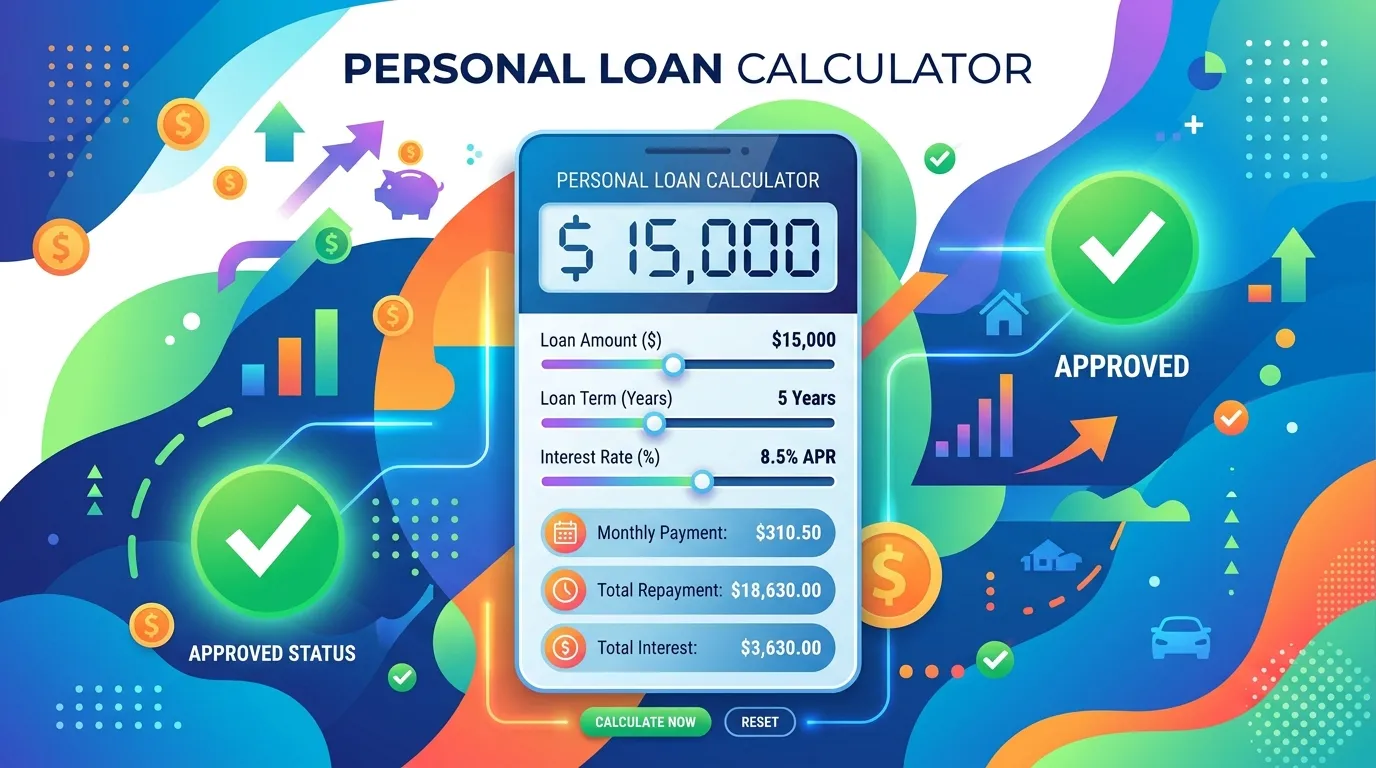
How Personal Loan Interest Works
Personal loans typically use simple interest amortized over a fixed term. This means your monthly payment remains exactly the same for the duration of the loan. However, the composition of that payment changes over time. In the early months, a larger portion of your payment goes toward interest. As the balance decreases, more of your payment goes toward the principal.
The Impact of Loan Terms
When selecting a personal loan, you are usually offered a choice of terms (e.g., 24, 36, or 60 months). It is a common misconception that extending the term is a better financial move because it lowers the monthly payment. In reality, stretching the loan significantly increases the total interest paid.
For example, a $15,000 loan at 10% interest over 36 months costs $2,424 in total interest. That same loan stretched to 60 months costs $4,122 in interest. You lower your monthly obligation, but pay nearly double the borrowing fee.
✔ Personal Loan Checklist
Frequently Asked Questions (FAQs)
Are personal loan interest rates fixed or variable?
The majority of personal loans offer fixed interest rates, meaning your monthly payment and rate will never change during the life of the loan. Variable rate loans exist but carry the risk of increasing payments if market rates rise.
Does applying for a personal loan hurt my credit score?
Checking your rate (getting a pre-qualification) usually requires only a soft pull, which does not affect your score. However, formally applying for the loan triggers a hard inquiry, which can temporarily lower your FICO score by a few points.