How to Improve Your Credit Score by 100 Points
A 100-point increase in your credit score can mean the difference between loan rejection and approval, or thousands of dollars saved in mortgage interest. Rather than relying on credit repair gimmicks, reaching a higher tier requires a targeted approach to the mathematical components that make up your FICO score. This guide will walk you through the exact, legal steps to rapidly and sustainably boost your credit score.
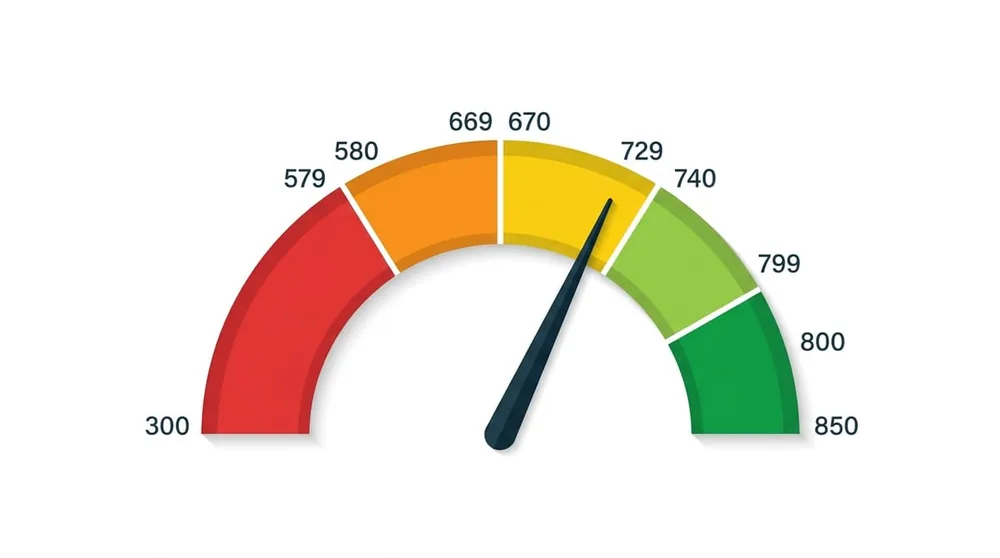
1. Understand the FICO Math
Before you can fix your score, you must understand exactly how the algorithms grade you. The FICO scoring model (which is used by 90% of top lenders) breaks your score down into five specific categories, heavily weighted toward your immediate payment behaviors.
- Payment History (35%): Whether you have paid your past credit accounts on time.
- Amounts Owed (30%): How much debt you carry compared to your credit limits (also known as credit utilization).
- Length of Credit History (15%): The age of your oldest account, newest account, and the average age of all accounts.
- Credit Mix (10%): The diversity of your accounts (e.g., credit cards, auto loans, mortgages).
- New Credit (10%): How many new accounts or hard inquiries you have recently applied for.
Because Payment History and Amounts Owed make up 65% of your total score, these two areas are where you can make the fastest, most impactful 100-point changes.
2. Drastically Lower Your Credit Utilization
Your credit utilization ratio is the percentage of your total available credit that you are currently using. If you have a credit card with a $10,000 limit and a $5,000 balance, your utilization is 50%. This is the fastest moving component of your credit score; unlike payment history which takes years to build, utilization updates every single month.
Financial experts generally recommend keeping your utilization below 30%. However, to squeeze maximum points out of the FICO algorithm, you should aim to keep it under 10%. If you currently have maxed-out credit cards, simply paying down the balances can trigger a 40 to 60 point jump within 30 to 45 days, as soon as the banks report the new lower balances to the credit bureaus.
If you cannot afford to pay down the balances immediately, you can use a strategic alternative: request a credit limit increase. If your $10,000 limit is increased to $20,000, your $5,000 balance mathematically drops from 50% utilization to 25% utilization without you paying an extra dime.
3. Dispute Errors on Your Credit Report
According to a study by the FTC, one in five consumers has an error on at least one of their credit reports. These errors can drag down your score unfairly. You have a legal right under the Fair Credit Reporting Act to view your reports for free and dispute inaccuracies.
Go to AnnualCreditReport.com (the only federally authorized site for free reports) and pull your data from Equifax, Experian, and TransUnion. Look for specific red flags:
- Late payments reported that were actually paid on time.
- Accounts that do not belong to you (potential identity theft).
- Old derogatory marks that are older than 7 years (which should legally fall off).
- Incorrect balances or credit limits.
If you find an error, you must file a formal dispute with the credit bureau. By law, they have 30 days to investigate. If the creditor cannot verify the negative information, the bureau must delete it from your file. Having a false late payment or charge-off removed can instantly boost your score by 30 to 50 points.
4. Become an Authorized User
If you have a thin credit file or a low score, you can "piggyback" on someone else's excellent credit. Ask a trusted family member or spouse with a long-standing, perfect-payment credit card to add you as an authorized user on their account.
When you are added as an authorized user, the entire history of that specific credit card is copied onto your credit report. If the card has been open for 10 years, has a $20,000 limit, and zero missed payments, your credit report instantly inherits those positive metrics. You do not even need to possess the physical card to get the mathematical benefit.
However, you must be extremely careful. If the primary account holder misses a payment or maxes out the card, that negative data will also appear on your report and damage your score.
5. Use Experian Boost and Rent Reporting
Historically, FICO scores only factored in debt payments. Bills you pay every month—like rent, cell phone, and utilities—never helped your score, but could hurt it if they went to collections. New programs are changing this.
Experian Boost: This is a free opt-in program where you connect your bank account to Experian. It scans for on-time payments to utility companies, telecom providers, and even streaming services (like Netflix). It adds these positive payment histories to your Experian credit file. The average user sees a 13-point increase instantly.
Rent Reporting Services: Services like RentTrack, Boom, or Rental Kharma will verify your on-time rent payments and report them to the bureaus. Since rent is usually your largest monthly expense, establishing a 24-month history of perfect rent payments can add significant bulk to a thin credit file.
Frequently Asked Questions (FAQs)
How long does it take to increase my score by 100 points?
It depends entirely on why your score is low. If it is low because of high utilization, paying down your balances can jump your score 100 points in 30 to 60 days. If your score is low because of a recent bankruptcy or foreclosure, it will take several years of perfect payment history to recover those points.
Will checking my own credit score lower it?
No. Checking your own credit report is considered a "soft inquiry" and has absolutely zero impact on your credit score. Only "hard inquiries"—which occur when a lender checks your credit to approve an application for new debt—will cause a temporary 2 to 5 point drop.
Should I close old credit cards I no longer use?
Generally, no. Closing an old credit card reduces your total available credit, which instantly spikes your credit utilization ratio. It also eventually lowers the average age of your accounts. Unless the card charges a high annual fee, it is usually mathematically better to leave it open and use it for a small purchase once every six months to keep it active.