How Self-Employed Individuals Save for Retirement in 2026 (SEP-IRA vs. Solo 401k)
When you work for a traditional corporation, building retirement savings is largely automated: human resources enrolls you in a workplace 401(k), deducts regular contributions directly from your bi-weekly paycheck, and often adds an employer matching bonus. But when you transition to independent consulting, freelancing, or launching your own business in 2026, nobody is coming to rescue your retirement. As a self-employed professional, you wear two separate occupational hats: you are both the hardworking employee and the corporate employer. Fortunately, the United States Tax Code rewards entrepreneurial self-reliance by offering robust retirement vehicles—specifically the Simplified Employee Pension (SEP-IRA) and the Solo 401(k)—that allow independent professionals to tuck away significantly larger tax-deductible sums than standard W-2 workers ever could. Here is how to navigate the contribution math and take total ownership of your financial independence.
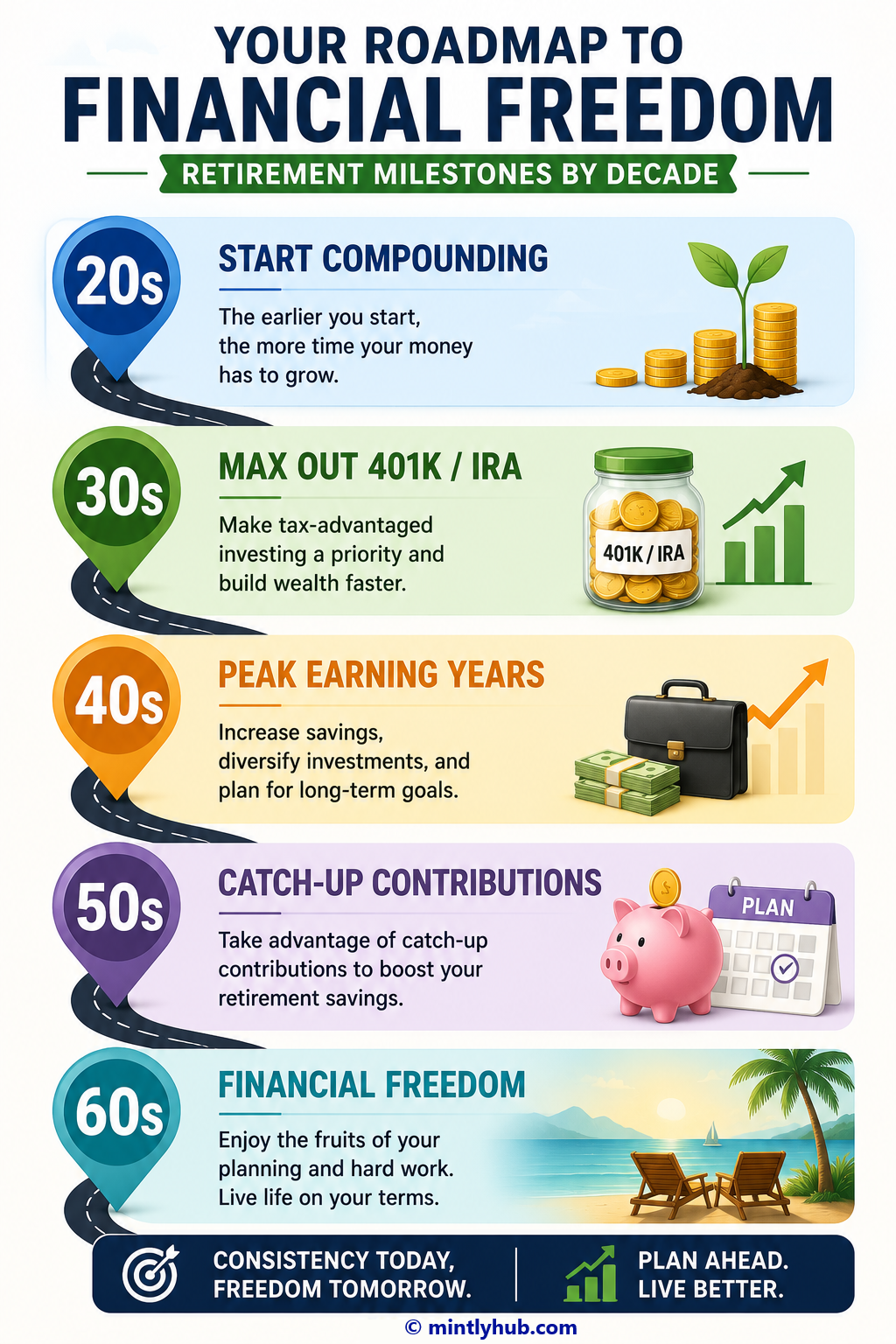
⚡ Action Checklist: 4 Step Business Retirement Blueprint
Before filing your annual business tax returns, execute these four tactical wealth moves:
- ✔Verify Your Eligibility Criteria: To open a high-limit Solo 401(k), verify that your business employs no full-time regular workers other than yourself and your lawful spouse. If you employ external staff, default immediately to a SEP-IRA or SIMPLE IRA.
- ✔Separate Net Profit from Gross Billing: Never calculate retirement contribution percentages directly from gross top-line revenue; statutory contributions are strictly anchored to your Net Schedule C Profit after operating expenses and self-employment tax deductions!
- ✔Check Account Opening Deadlines: A SEP-IRA can be formally opened and funded right up until your extended tax return filing deadline (typically October 15th), giving you extraordinary flexibility to lower your taxable income retroactively.
- ✔Invest in Low-Cost Index Funds: Don't leave contributions idling as uninvested cash money market settlements; deploy your retirement funds into broad market equity portfolios with low expense ratios to maximize long-term compounding.
1. The Two Titans of Freelance Retirement: SEP-IRA vs. Solo 401(k)
When designing a business retirement blueprint for 2026, sole proprietors, independent contractors, and gig-economy freelancers generally choose between two institutional frameworks designed by the Internal Revenue Service:
**The Simplified Employee Pension (SEP-IRA):** The SEP-IRA functions essentially as an supercharged Traditional IRA funded entirely through employer contributions. Because administrative maintenance is practically non-existent, many solo freelancers prefer its sheer simplicity. For tax year 2026, you can contribute up to **20% of your net self-employment earnings** (or 25% of W-2 compensation if operating as an S-Corporation), capped at an annual maximum ceiling of **$69,000**. According to guidance published on the official Internal Revenue Service (IRS) SEP Guide, contributions are tax-deductible in the year made and grow tax-deferred until retirement distributions begin at age 59½.
**The Solo 401(k) (or One-Participant 401k):** Tailored specifically for solo entrepreneurs with zero full-time non-owner employees, the Solo 401(k) is widely considered the ultimate tax-advantaged vehicle for high earners. Why? Because it permits you to contribute money in **both capacities**:
- As the Employee (Elective Deferrals): You can contribute up to **$23,000 of your net income in 2026** (or $30,500 if you are age 50 or older via catch-up provisions).
- As the Employer (Profit Sharing): You can add an additional employer contribution equal to **20% of your net self-employment income**, all up to a combined aggregate limit of **$69,000** ($76,500 if age 50+).
Because of this double-tiered structure, self-employed individuals earning moderate incomes between $60,000 and $120,000 can typically shelter significantly more pre-tax capital inside a Solo 401(k) than inside a standard SEP-IRA!
📊 Real-Life Case Study: Marcus the Freelancing Developer ($80,000 Net Profit)
To understand how contribution rules radically alter your tax shelter capacity in 2026, let's examine Marcus, an independent software developer aged 38 who earned a **Net Schedule C Profit of $80,000** after subtracting operating business deductions. Let's compare his maximum legal contribution ceilings across both accounts:
Option A: SEP-IRA Contribution
• Net Business Profit: $80,000
• SEP Employer Cap Math: Approximately 18.59% of Net Earnings (after mandatory half self-employment tax deduction adjustment)
• Maximum Allowable Contribution: $14,872
• Estimated Federal Tax Savings (24% Bracket): ~$3,569
Option B: Solo 401(k) Contribution (Winner!)
• Employee Salary Deferral Portion: +$23,000
• Employer Profit Sharing Portion: +$14,872
• Maximum Allowable Contribution: $37,872!
• Estimated Federal Tax Savings (24% Bracket): ~$9,089 in direct tax relief!
Takeaway: On an identical $80,000 independent profit, Marcus sheltered **+$23,000 more inside a Solo 401(k)** than in a SEP-IRA, preserving over $9,000 from immediate IRS tax erosion!
2. Managing Irregular Income and Cash Flow Buffers
One of the greatest emotional obstacles for independent contractors is managing inconsistent monthly cash flow. When your revenue depends on seasonal customer demand or unpredictable client invoice payments, committing large monthly retirement transfers can feel risky.
Accredited financial advisors recommend a systematic solution for variable incomes: the **Percentage-Based Transfer Rule**. Rather than forcing yourself to transfer a fixed dollar sum (such as $1,500 every month), commit to moving a disciplined percentage (such as 15% or 20%) of every client invoice directly into your dedicated business savings reserve the exact business day the payment settles. Once per calendar quarter, transfer accumulated surpluses into your Solo 401(k) or SEP-IRA brokerage account.
Before contributing heavy pre-tax capital into locked retirement accounts, verify that you retain at least six to nine months of personal operating expenses inside a liquid High-Yield Savings Account (HYSA). Calculate your required baseline safety net directly via our free Emergency Fund Calculator.
Frequently Asked Questions (FAQ)
Can I have both a W-2 day job 401(k) and a side-business Solo 401(k)?
Yes, but with an critical administrative caveat: your individual **employee elective deferral limit ($23,000 for 2026)** is shared across all combined workplace and individual 401(k) plans! If you contribute $15,000 to your corporate employer's retirement plan, you can only contribute up to $8,000 as an employee in your side-business Solo 401(k). However, your side-business **employer profit-sharing limit (20% of net self-employed income)** remains entirely distinct and unaffected!
What happens if I eventually hire employees in my growing business?
The defining legal requirement of a Solo 401(k) is that your enterprise must employ zero full-time, eligible non-owner workers (typically defined as individuals working 1,000+ hours annually or 500+ hours across three consecutive years). If your business expands and brings on permanent employees, your plan loses its "Solo" exemption and must either transition into a traditional 401(k) subject to nondiscrimination testing or migrate to a more manageable SEP-IRA or SIMPLE IRA structure.
Do I have to file annual tax reports for a Solo 401(k)?
As long as your total accumulated Solo 401(k) plan assets remain below **$250,000** at the close of the calendar plan year, you are generally exempt from annual tax reporting. However, the very first year your retirement balance crosses the $250,000 threshold, federal pension regulations mandate that you file **IRS Form 5500-EZ** annually. Failure to timely file Form 5500-EZ can trigger substantial administrative monetary penalties.