What is PMI (Private Mortgage Insurance)?
Private Mortgage Insurance (PMI) is an additional monthly fee added to your conventional mortgage payment if you purchase a home with a of less than 20%. Despite what the name suggests, this insurance does not protect you—it protects your lender.
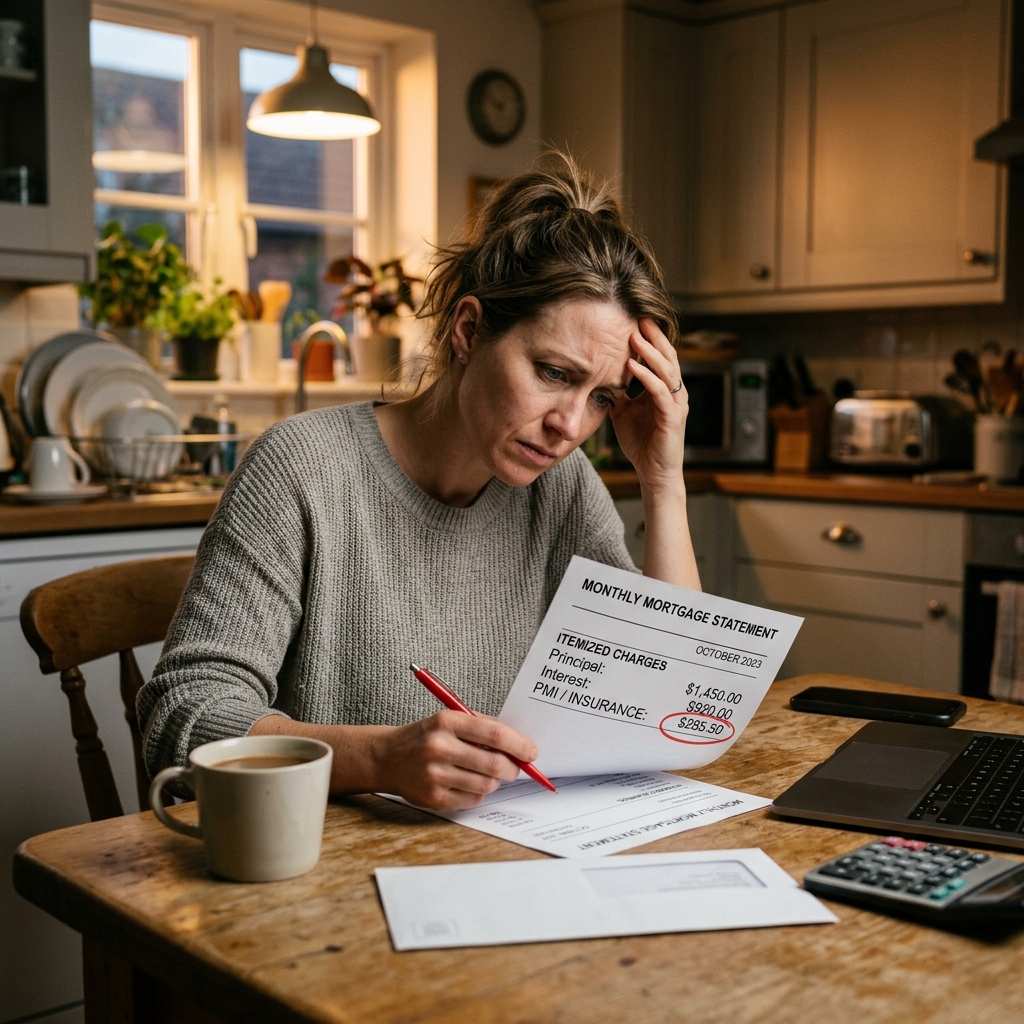
How Does PMI Work?
When a bank lends you hundreds of thousands of dollars to buy a house, they take on significant financial risk. If you default on your loan and the bank has to foreclose on the home, they want a buffer to ensure they don't lose money selling the property.
Historically, a 20% down payment provided that buffer. If you do not have 20% to put down, the lender considers you a higher-risk borrower. To mitigate that risk, they force you to buy a PMI policy. If you stop making payments, the PMI company reimburses the lender for their losses.
How Much Does PMI Cost?
PMI typically costs between 0.3% and 1.5% of your original loan amount per year. The exact cost depends on two main factors:
- Your Credit Score: Borrowers with excellent credit (760+) will pay the lowest PMI rates. Borrowers with fair credit (620-680) will pay significantly higher PMI premiums.
- Your Down Payment: A 15% down payment will trigger a much cheaper PMI rate than a 3% down payment because the lender is taking on less risk.
For example, if you borrow $400,000 and your PMI rate is 1%, you will pay $4,000 per year, or roughly $333 every month in unrecoverable costs.
How to Remove PMI
The good news is that conventional PMI is not permanent. Under federal law, your lender must automatically cancel your PMI on the date your loan balance is scheduled to reach 78% of the home's original value.
However, you can request to have PMI removed earlier if your loan balance reaches 80% of the home's original value due to making extra principal payments. You can also request a new appraisal if your home has significantly increased in value due to market appreciation or major renovations. If the new appraisal proves you have 20% equity, the lender may drop the PMI early.
Frequently Asked Questions (FAQs)
Can I pay PMI upfront instead of monthly?
Yes. Some lenders offer single-premium PMI, where you pay the entire insurance premium as a lump sum at closing. Alternatively, lender-paid mortgage insurance (LPMI) allows the lender to pay the PMI upfront in exchange for charging you a higher mortgage interest rate for the life of the loan.