How to Build Credit Fast in 2026 (Even With Zero History)
In the modern American financial system, having no credit history is mathematically worse than having a bad credit history. Without a verified FICO score, lenders essentially treat you as a ghost, locking you out of affordable auto loans, premium rewards cards, and competitive mortgage rates. Fortunately, the algorithmic formulas used by Experian, Equifax, and TransUnion are entirely public. Here is the step-by-step fiduciary playbook to engineer a 700+ from absolute zero in 2026.
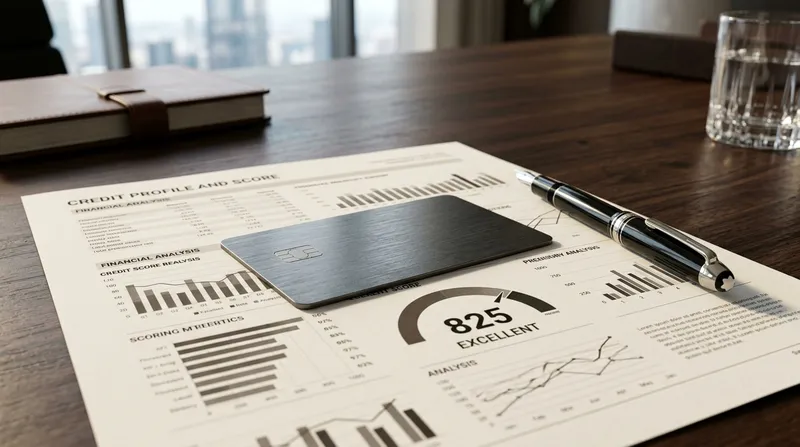
1. The Secured Credit Card Strategy
You cannot get a traditional credit card because you have no credit, but you cannot build credit without a credit card. This paradox traps millions of young adults and immigrants. The mathematical solution is a Secured Credit Card.
A secured card requires a cash deposit upfront. If you deposit $500, the bank issues you a card with a $500 credit limit. Because your cash acts as collateral, the bank takes zero risk, meaning you are guaranteed approval regardless of your non-existent . Crucially, the bank reports your monthly payments to all three major credit bureaus, establishing your official FICO history. After 6 to 8 months of responsible use, the bank will typically refund your deposit and upgrade you to an "unsecured" premium card.
2. Action Checklist: The 700+ Score Blueprint
Achieving excellent credit is not about earning a massive salary; it is entirely about demonstrating algorithmic reliability. Follow this strict checklist to hack the credit scoring model in your first year:
✔ Step-by-Step Credit Building Checklist
- 1Open a Secured Card: Apply for a low-fee secured card (e.g., Discover it® Secured or Capital One Platinum Secured) with a $200–$500 deposit.
- 2Setup Autopay Immediately: Payment history accounts for 35% of your FICO score. Missing a single payment will destroy your credit for 7 years. Link your checking account and enable "Auto-Pay Statement Balance in Full."
- 3Implement the 10% Utilization Rule: Never spend more than 10% of your limit. If your limit is $500, never let the balance exceed $50. High utilization signals financial distress to the algorithm.
- 4Become an Authorized User: Ask a parent or trusted relative with a long, pristine credit history to add you as an "Authorized User" on their oldest credit card. Their entire multi-year flawless history will instantly clone onto your blank credit report.
- 5Report Rent and Utilities: Use modern fintech services like Experian Boost or Bilt Rewards to officially report your monthly rent, Netflix, and utility payments directly to the credit bureaus.
3. Real-Life Scenario: The Utilization Mistake
The most misunderstood aspect of credit building is "Credit Utilization," which controls a massive 30% of your total FICO score. Let us observe how two beginners handle a $500 secured card differently.
Case Study: The 10% Utilization Secret
Baseline: Both users open a $500 Secured Card and pay in full every month.User A (Maxing Out): User A buys $480 worth of groceries and gas, bringing their balance to $480. They pay the $480 in full on the due date. Because they utilized 96% ($480 / $500) of their limit when the statement generated, the credit algorithm flags them as "high risk" and cash-strapped. Result: Score drops to 590.
User B (The Micro-Charge Play): User B sets the card to auto-pay their $15 Spotify subscription, then puts the physical card in a drawer. Because they utilized only 3% ($15 / $500) of their limit when the statement generated, the algorithm flags them as highly responsible with abundant excess capital. Result: Score skyrockets to 710.
The Financial Verdict: It does not matter if you pay in full; what matters is the balance that is reported to the bureaus on your statement closing date. Keep your reported balance strictly below 10% of your total limit to maximize your FICO score.
4. The Danger of Applying for Too Many Cards
Every time you formally apply for a new line of credit (a credit card, auto loan, or personal loan), the bank triggers a "Hard Inquiry" on your credit file. According to The Consumer Financial Protection Bureau (CFPB), a hard inquiry will temporarily lower your score by 3 to 5 points.
While one inquiry is harmless, generating five inquiries in a single month signals to banks that you are desperately hunting for cash, causing the algorithm to plunge your score into the subprime tier. When building credit, you must adhere to the 6-Month Rule: Never apply for a new credit card less than 6 months after your previous application.
5. Frequently Asked Questions (FAQs)
Does checking my own credit score lower it?
No. Checking your own credit via free apps like Credit Karma, Experian, or through your bank portal is classified as a "Soft Inquiry." Soft inquiries are completely invisible to lenders and have absolutely zero impact on your FICO score, no matter how many times you check it.
How long does it take to get a 700 credit score?
If you are starting from a completely blank file (no bad debt), you can mathematically achieve a 700+ FICO score in exactly 6 months. By combining a secured card kept under 10% utilization and becoming an Authorized User on a pristine account, the bureaus will generate a prime score the moment your 6-month history locks in.
Should I carry a balance to build credit?
Absolutely not. This is the most dangerous and expensive myth in personal finance. Carrying a balance and paying 29% interest does absolutely nothing to boost your credit score compared to paying the balance in full. Always pay your statement balance in full to build credit while paying zero interest.