What is a Credit Utilization Ratio? (The 30% Rule Explained for 2026)
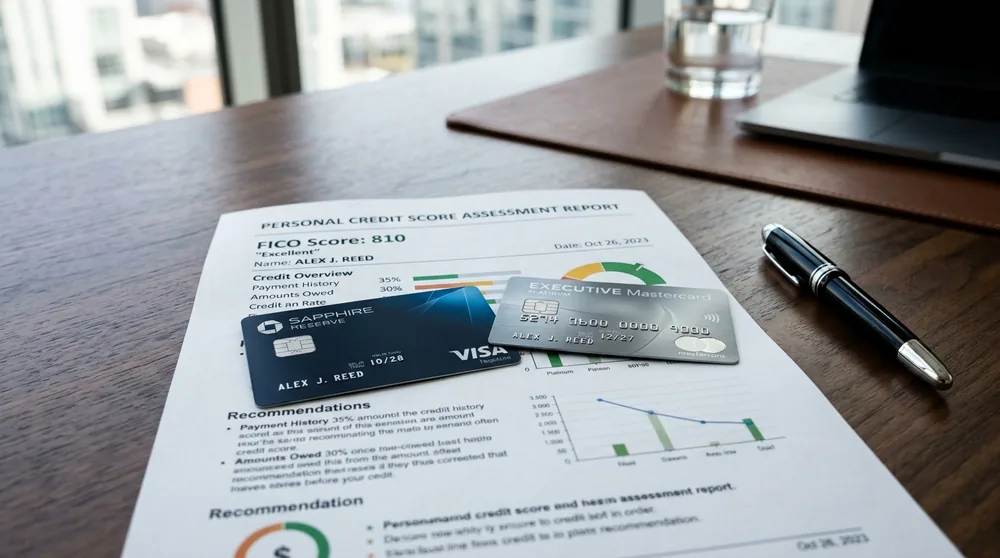
When credit scoring algorithms calculate your lending trustworthiness in 2026, your credit utilization ratio represents the second most significant quantitative pillar after payment history, accounting for 30% of your FICO score calculation. Simply put, credit utilization measures the total proportion of available revolving credit lines that you are currently borrowing against. Lenders view high credit utilization as an urgent warning sign of financial stress and overleveraging, whereas keeping your utilization low signals masterclass credit discipline. Here is how banking underwriters evaluate your ratio and how you can optimize it immediately.
⚡ Action Checklist: 4 Proven Tactics to Lower Credit Utilization
If high card balances are currently suppressing your credit score, apply these instant optimization moves:
- ✔Pay Before the Statement Closing Date: Credit bureaus record your balance on your billing statement closing date, not your payment due date. Pay your balance down 3 days before closing!
- ✔Request a Credit Limit Increase (CLI): Ask your bank for a higher credit limit online without changing your spending habits, instantly diluting your utilization ratio mathematically.
- ✔Make Bi-Weekly Micro-Payments: Split your monthly card payments into two smaller payments aligned with your paychecks so your balance never peaks high at the end of the month.
- ✔Never Close Old Unused Credit Cards: Closing an older card wipes out its available credit limit from your formula, forcing your utilization ratio on remaining cards to skyrocket immediately.
1. How Credit Utilization Ratio is Calculated
Calculating your credit utilization ratio requires simple dividing mathematics: take your total current revolving credit balances across all active cards and divide that sum by your total available borrowing credit limit across all cards. Then, multiply by 100 to convert the figure into a percentage.
For example, if you own three credit cards with combined spending limits totaling $10,000, and your outstanding current debt across those cards is $2,500, your credit utilization ratio is exactly 25% ($2,500 ÷ $10,000).
Crucially, credit scoring models evaluate utilization on two separate levels: **aggregate utilization** (your across-the-board card ratio) and **per-card utilization** (the balance ratio on each individual credit card account). Even if your overall aggregate ratio is a pristine 15%, maxing out one specific card at 95% utilization will lower your overall FICO score significantly.
Official education guides from the Consumer Financial Protection Bureau (CFPB) emphasize that unlike installment loans (such as auto loans or mortgages), only revolving credit facilities factor directly into your credit utilization calculation.
📊 Real-Life Case Study: Mark’s Credit Score Jump via Billing Date Hack
Mark uses a major cash-back rewards credit card for all his monthly business and living expenses, charging exactly $4,200 per month on a card with a $5,000 credit limit. Mark is proud because he pays his balance off completely in full every month on his payment due date without paying a penny in interest. Yet, when applying for an auto loan, his FICO score came back lower than expected at 680. Why?
The Mistake: Paying After Closing Date
• Reported Statement Balance: $4,200
• Total Available Limit: $5,000
• Reported Utilization Ratio: 84% (Very High!)
• Bureau Impact: FICO算法 reads Mark as dangerously maxed out!
The Fix: Paying Before Closing Date
• Pay $3,800 three days before statement closes
• Reported Statement Balance: $400
• Reported Utilization Ratio: 8% (Elite Zone!)
• Result: Mark's credit score shot up +38 points immediately!
Takeaway: Credit bureaus only judge what appears on your monthly statement snapshots. By scheduling online electronic payoffs prior to the statement generation date, you control what the algorithms see.
2. Why 30% is the Benchmark (And Why 10% is Elite)
Financial planners universally recommend keeping your credit utilization below 30% of your total limit at all times. Crossing the 30% threshold acts as an algorithmic trigger where FICO score penalties begin compounding. However, zero utilization is actually not ideal! A consumer with 0% utilization gives credit bureaus no active repayment data to evaluate.
To achieve top-tier credit scores exceeding 780, aim for an **elite utilization ratio between 1% and 9%**. This demonstrates active credit facility utilization accompanied by impeccable revolving balance control.
Learn more about foundational credit scoring principles in our guide on What is a Good Credit Score in 2026, and discover how to verify your bureau reports without paying fees in our breakdown on How to Check Your Credit Score for Free.
Frequently Asked Questions (FAQ)
Do installment loans like car payments or mortgages affect my credit utilization ratio?
No. Credit utilization ratio strictly applies to revolving credit facilities—principally credit cards, personal lines of credit, and Home Equity Lines of Credit (HELOCs). Installment lending (like fixed auto loans, student debt, and 30-year mortgages) is tracked under different debt scoring components and does not influence revolving utilization formulas.
How fast does lowering my credit utilization ratio improve my FICO score?
Unlike payment history blemishes (like bankruptcies or default collections) which linger on reports for up to 7 years, credit utilization has **zero memory in standard FICO 8 scoring algorithms**. As soon as your bank reports a newly lowered statement balance to Experian, TransUnion, and Equifax—usually within 30 days—your credit score recalculates and bounces back immediately!
Will checking my credit score online hurt my credit utilization or rating?
Never. Checking your own personal credit report and utilization metrics via consumer financial portals constitutes a "soft inquiry," which has absolute zero impact on your FICO credit rating. Only formalized lending applications triggered when seeking new loans generate score-impacting "hard credit pulls."