What is Zero-Based Budgeting (ZBB)?
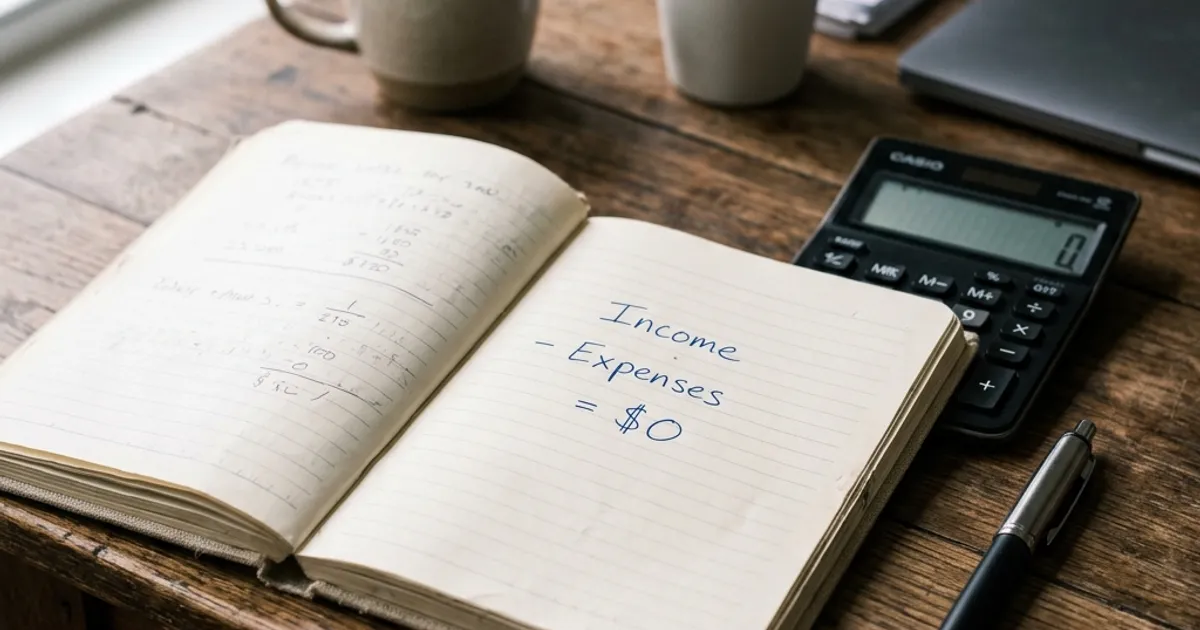
Zero-Based Budgeting (ZBB) is a financial strategy where your income minus your expenses equals exactly zero. Instead of leaving leftover cash in your checking account, you assign every single dollar a specific job—whether that is paying a bill, buying groceries, or going straight into savings.
How ZBB Works in Real Life
Imagine you bring home exactly $4,000 this month. In a traditional budget, you might pay $3,000 in bills and leave $1,000 sitting in your checking account "just in case." Without a plan, that $1,000 usually disappears on impulse purchases.
In a Zero-Based Budget, you must tell that $1,000 where to go before the month starts. You might send $400 to an emergency fund, $400 to grocery spending, and $200 to a sinking fund for car repairs. $4,000 in, $4,000 assigned. You end up with exactly $0 left "unassigned."
✔ ZBB vs. The 50/30/20 Rule
Both are popular, but they work differently:
- The 50/30/20 Rule: You strictly divide your money into 50% needs, 30% wants, and 20% savings. (You can test this using our 50/30/20 Calculator).
- Zero-Based Budgeting: You ignore percentages. You list out every exact expense line by line until you hit zero. ZBB takes more time, but it offers much tighter control over your money.
Why It Stops Overspending
When you use ZBB, you cannot simply swipe your debit card because you have "money in the bank." If your grocery category only has $50 left for the week, you can only spend $50. If you need to spend more, you are forced to actively pull money out of another category, like entertainment.
This method pairs extremely well with a No-Spend Month challenge. If you use a Paycheck Budget Calculator to zero out your income, you will physically see that you have zero dollars assigned to dining out, preventing the habit entirely.
Frequently Asked Questions (FAQs)
Does zero-based budgeting mean I have $0 in my bank account?
No! It means your income minus your assigned expenses equals zero. Your actual bank account will still hold the money until you pay the bills. You should always keep a permanent cash buffer in your checking account to prevent accidental overdrafts.
Is this method good for beginners?
It requires a lot of discipline. If you have never budgeted before, it can feel restrictive. Many beginners prefer to start with a simpler percentage-based budget before moving up to a strict ZBB system.